When I started sewing bras several years ago, I was much more interested in learning to sew what I think would be generally considered as typical, standard, or everyday styles of underwire bras. Of course, once I started sewing bras, it quickly became a rabbit hole of styles, materials, and techniques to try. And despite my going quite deep into the rabbit hole, in all of that I’ve never actually made a sports bra. I’m not as active as I was a decade ago, and I already had several quite serviceable sports bras at the time, which didn’t make sports bras a high priority for me. But at this point they are starting to show their age and are more than a bit small. And although it’s possible to find cheap sports bras, for anything that is functional in the larger size ranges, a proper sports bra is expensive (justifiably so; but still, expensive). So I thought since I’m already this far down the rabbit hole why not go deeper and start testing sports bra patterns? And since I’ve been on a bit of a Make Bra kick, I thought I’d start with the Make Bra Ulla Sport.
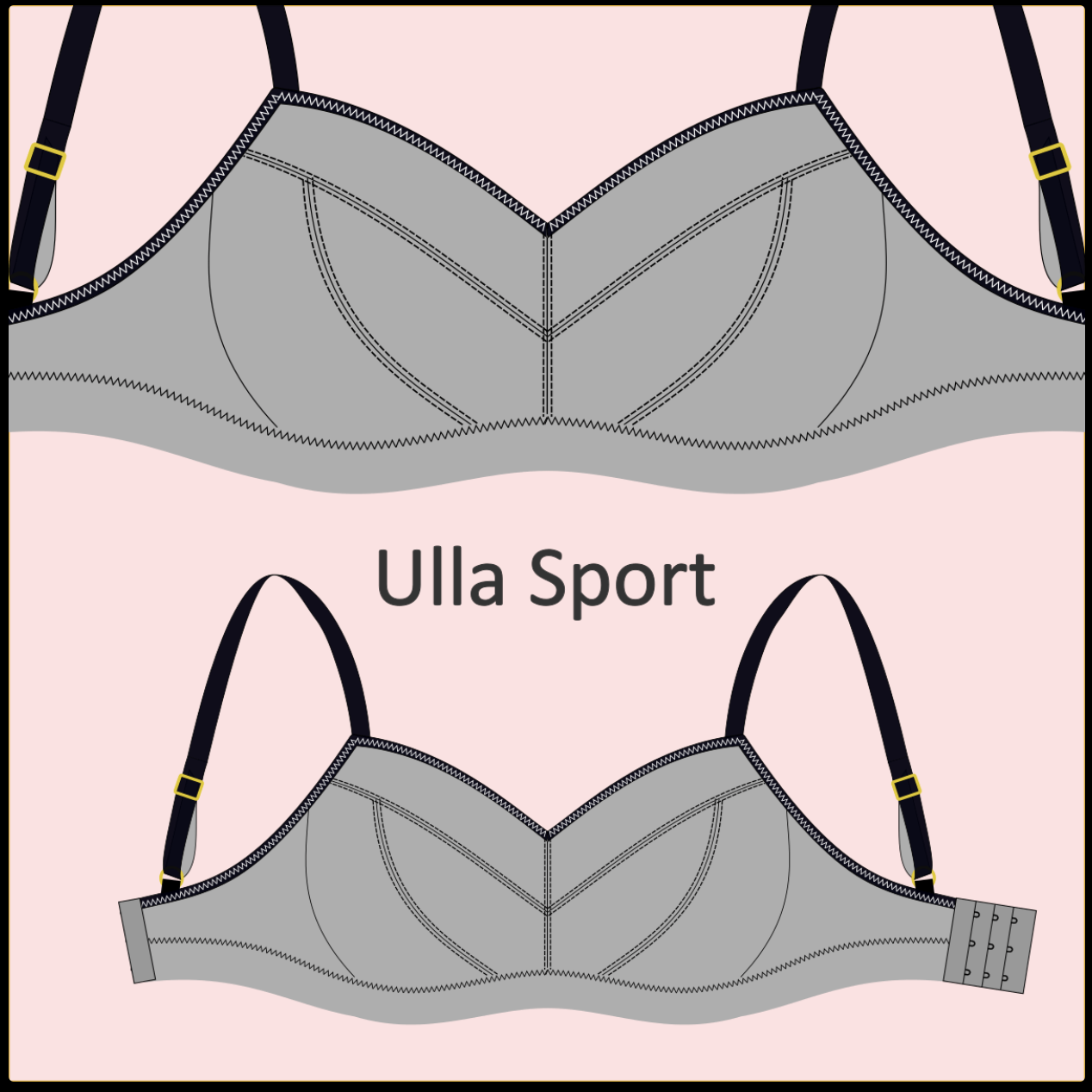
The Ulla Sport is one of several patterns from the Make Bra brand, though the only sports bra in their line. It has some very unique style line, which made me very interested to try it because I felt like the other Make Bra patterns were incredible at utilizing interesting seamlines to get fantastic shaping and I was hoping for the same here.
I started off with a basic mock-up, just to get a general sense of the sizing and fit of the pattern. I started with a size 90F, which was a good starting size for me in the DL02, and happily it was also a good starting size here.
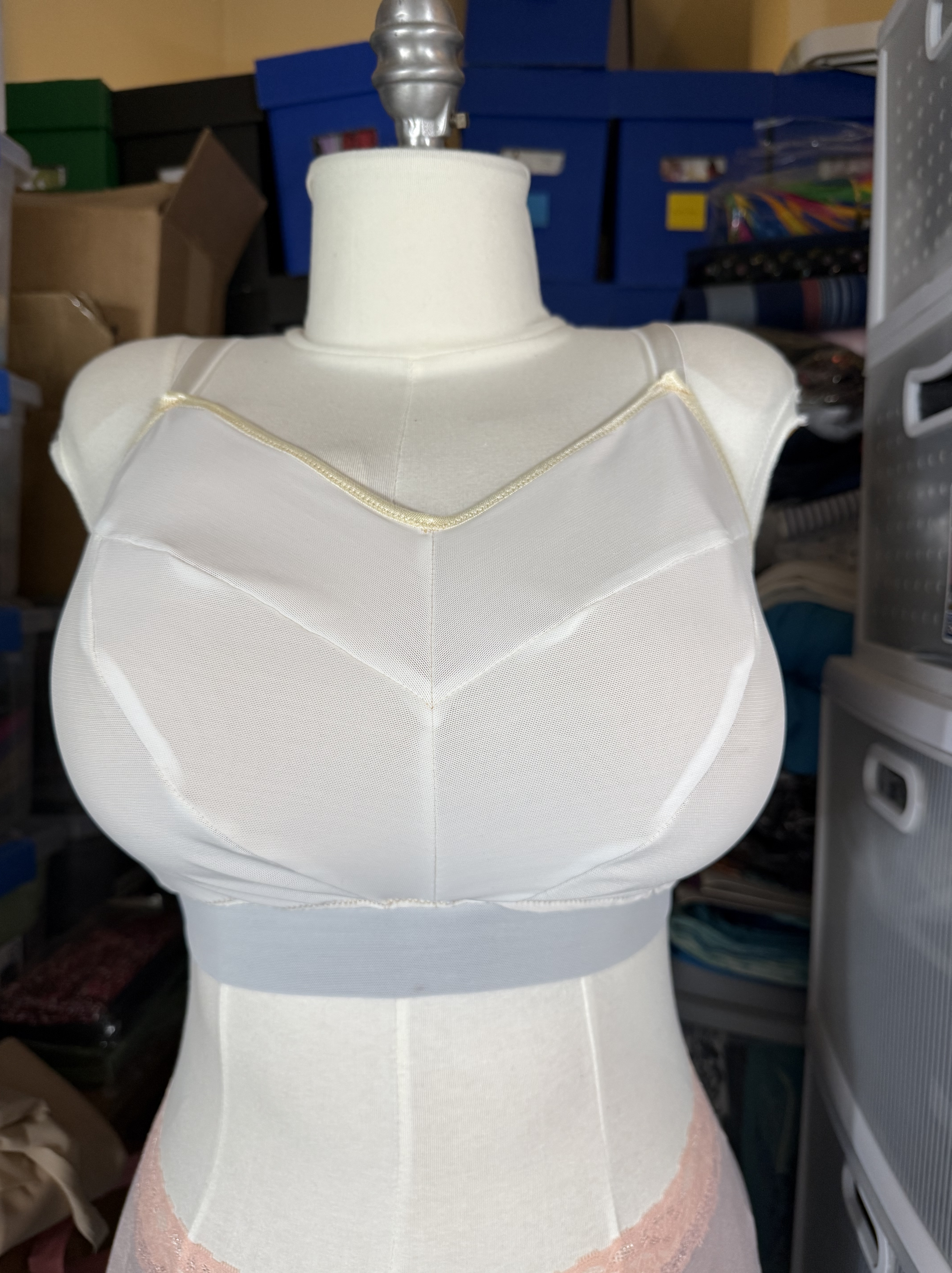
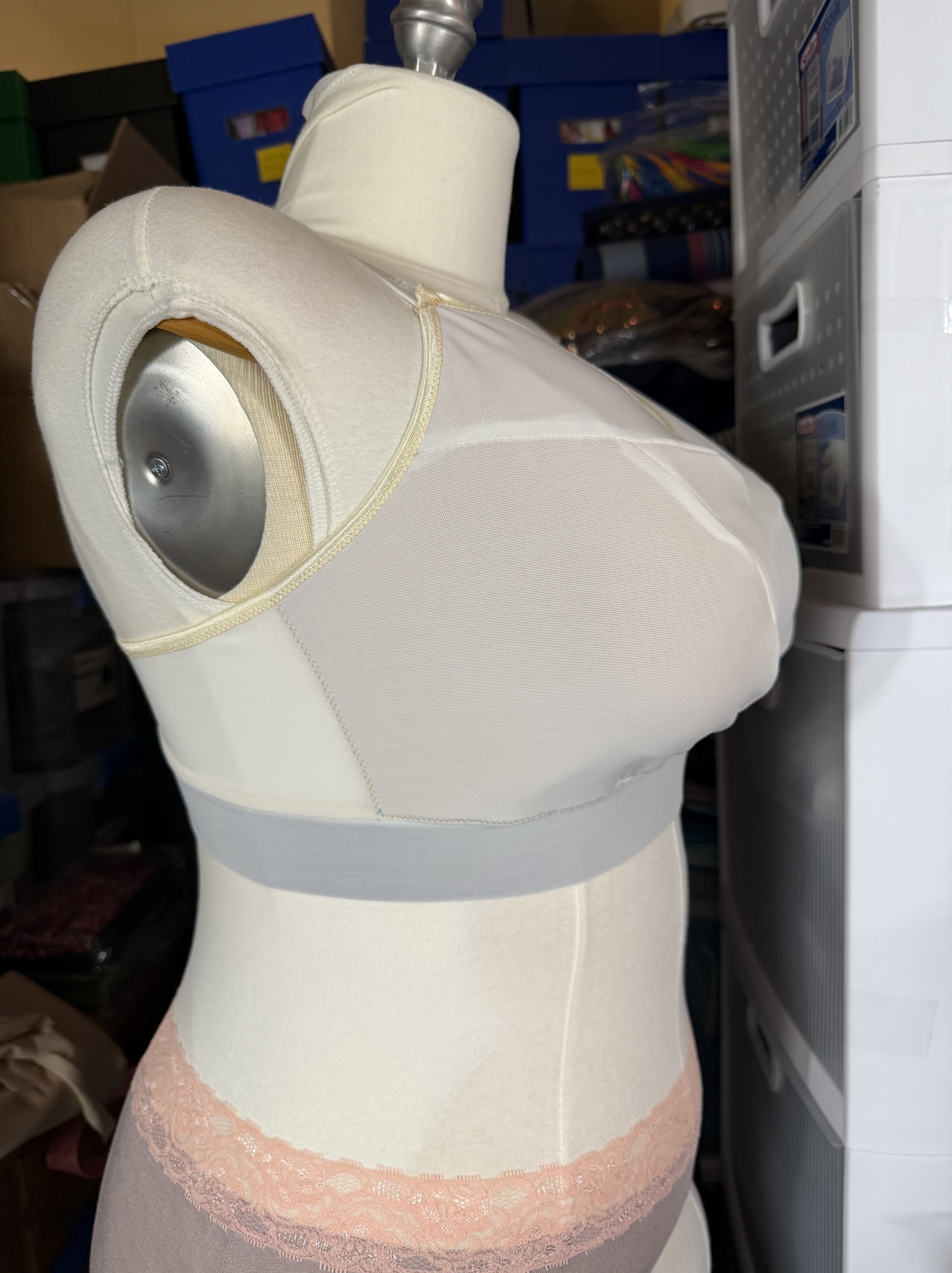
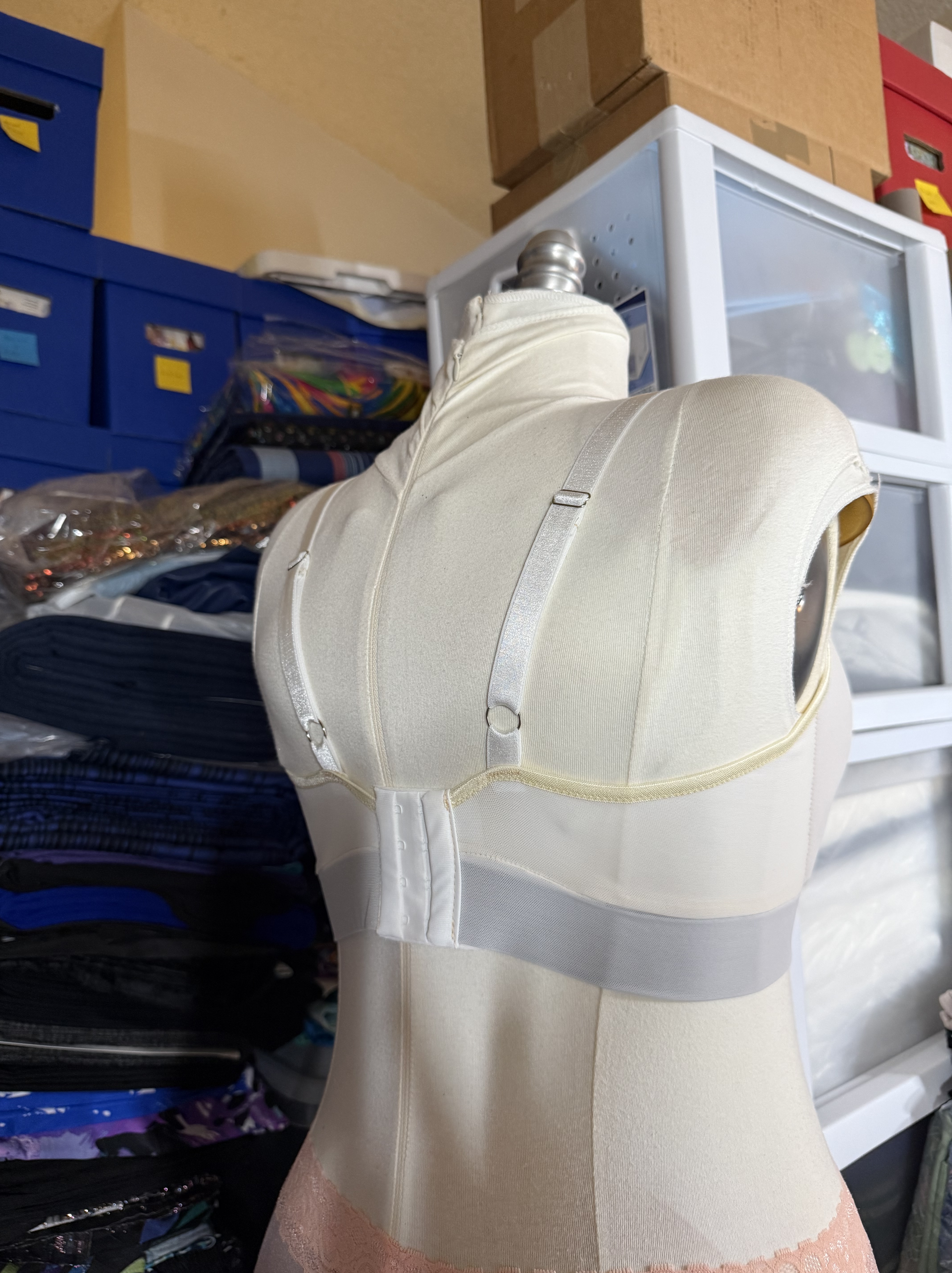
Although the general fit felt fine, I used somewhat cheaper materials in the fit sample, so it wasn’t a good test of structural integrity during activity, I could tell that the all-elastic straps weren’t going to be enough support, especially for a sports bra. So for my final version of the bra I made covered foam straps to try and reduce the amount of bounce that was occurring with the all-elastic straps. This got me thinking about what else I could do for stabilization, so during construction of the main bra I also tried to reinforce the foam seams with tricot tape.
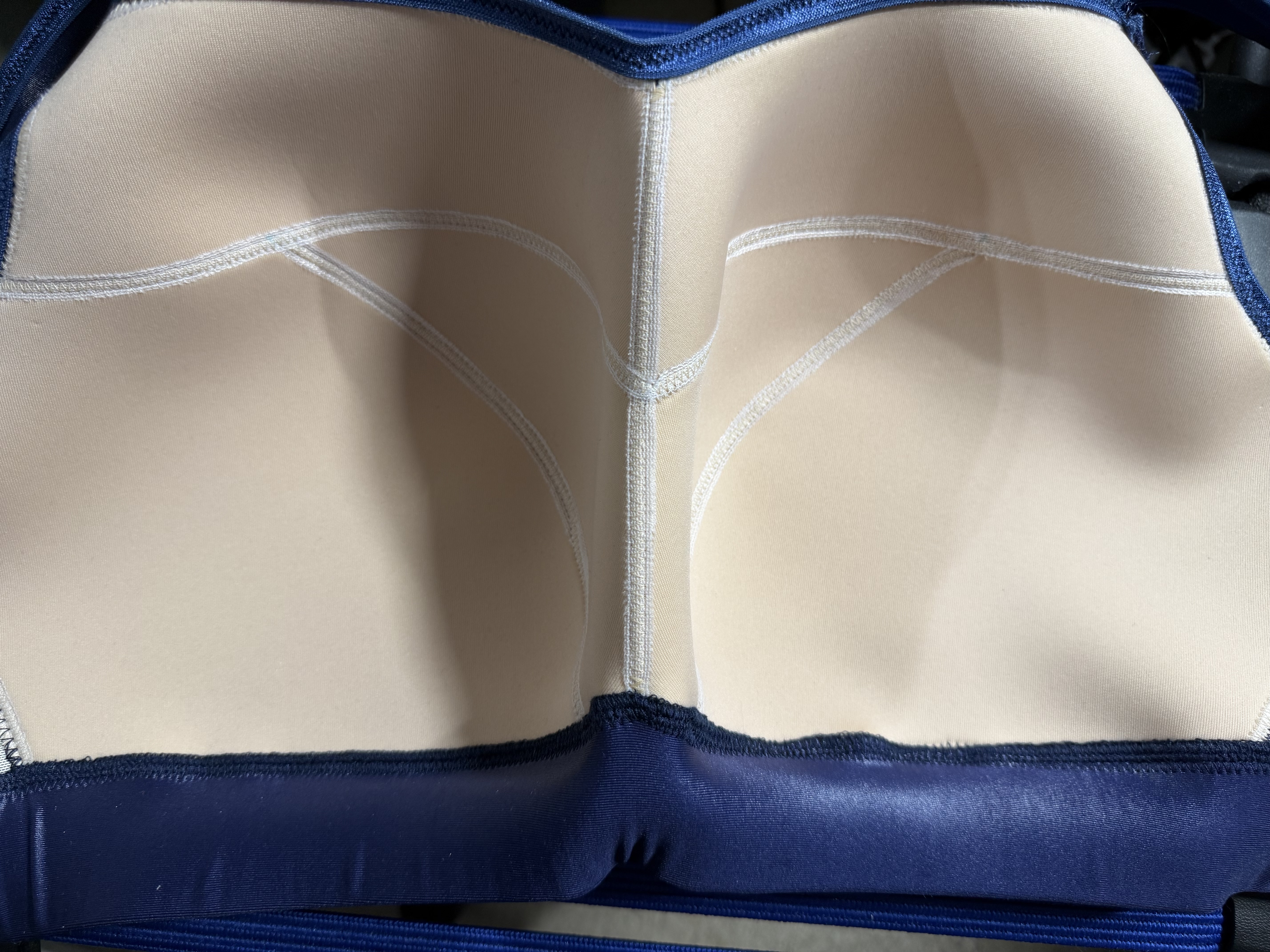
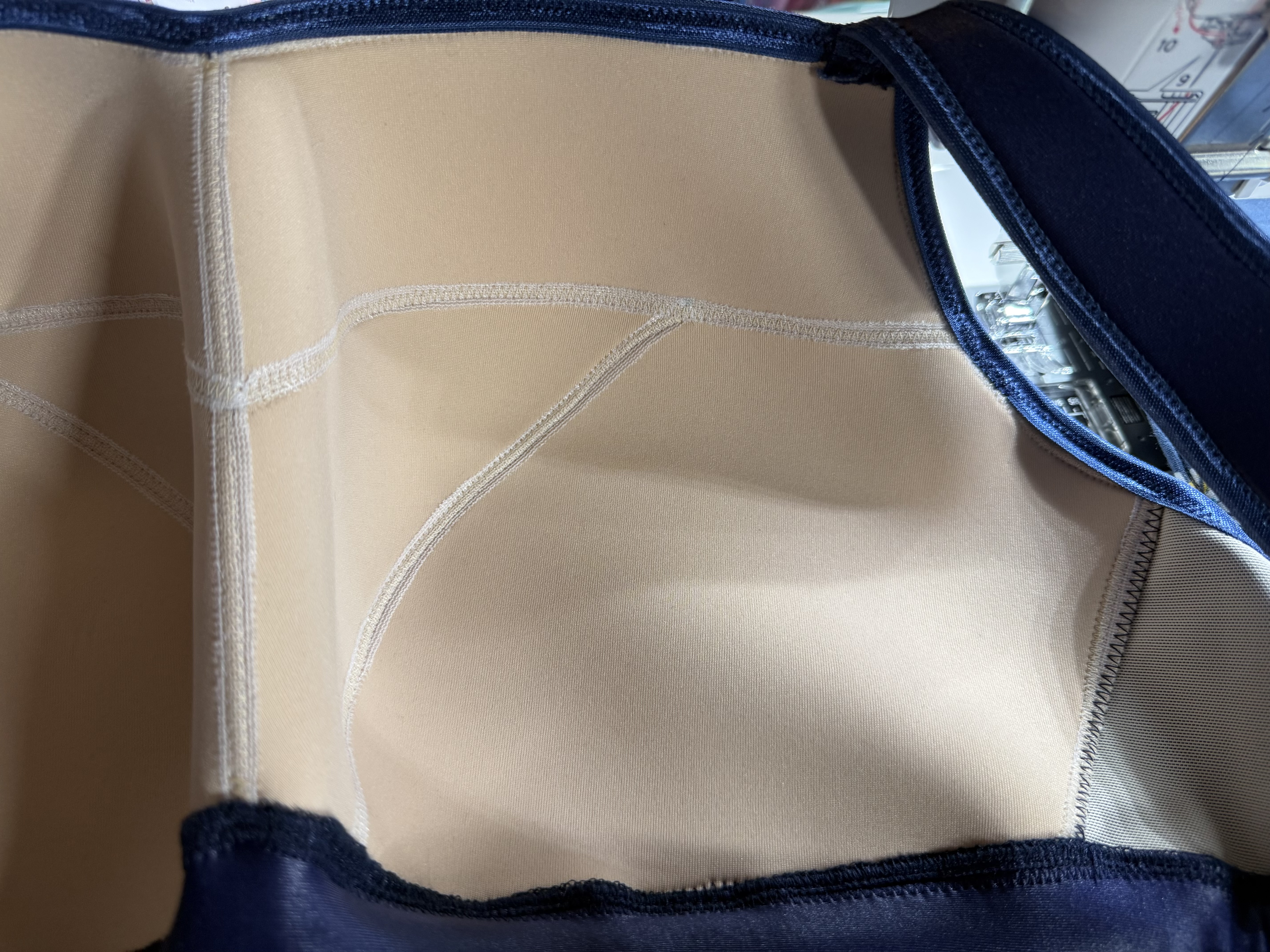
I think this finish looks really nice, but I find this type of finish to be really scratchy, especially along the side seams. I’m not sure the stabilization to annoyance ratio was worth it; in the future I would probably leave the seams along the curved lines without the seam tape (I’ve done this in all of my other foam bras and it has been fine), and probably only stabilize the center front and side seams with a different type of stabilizer, or cover the tricot stabilizer with another material to make it less prone to rubbing.
Overall the construction of this bra was pretty simple, except for the bottom band. The pattern instructs that the band should be attached to the fabric cover, then the elastic threaded through and the seam allowance used to stitch the bottom edge of the foam in place. I found all of these steps to be fiddly and annoying, and I really wish the band elastic was stitched down to prevent rolling in the band casing. Then trying to attach the foam to a very small serged seam is really fussy, especially with the thick foam I was using. So I’m not very pleased with that part of how the pattern turned out. I also didn’t stretch the cover enough over the foam, so it looks a bit pucker-y, which is not exactly the look I was going for. I’d definitely do some things different next time, including using a wider fold over elastic for the neckline edges.
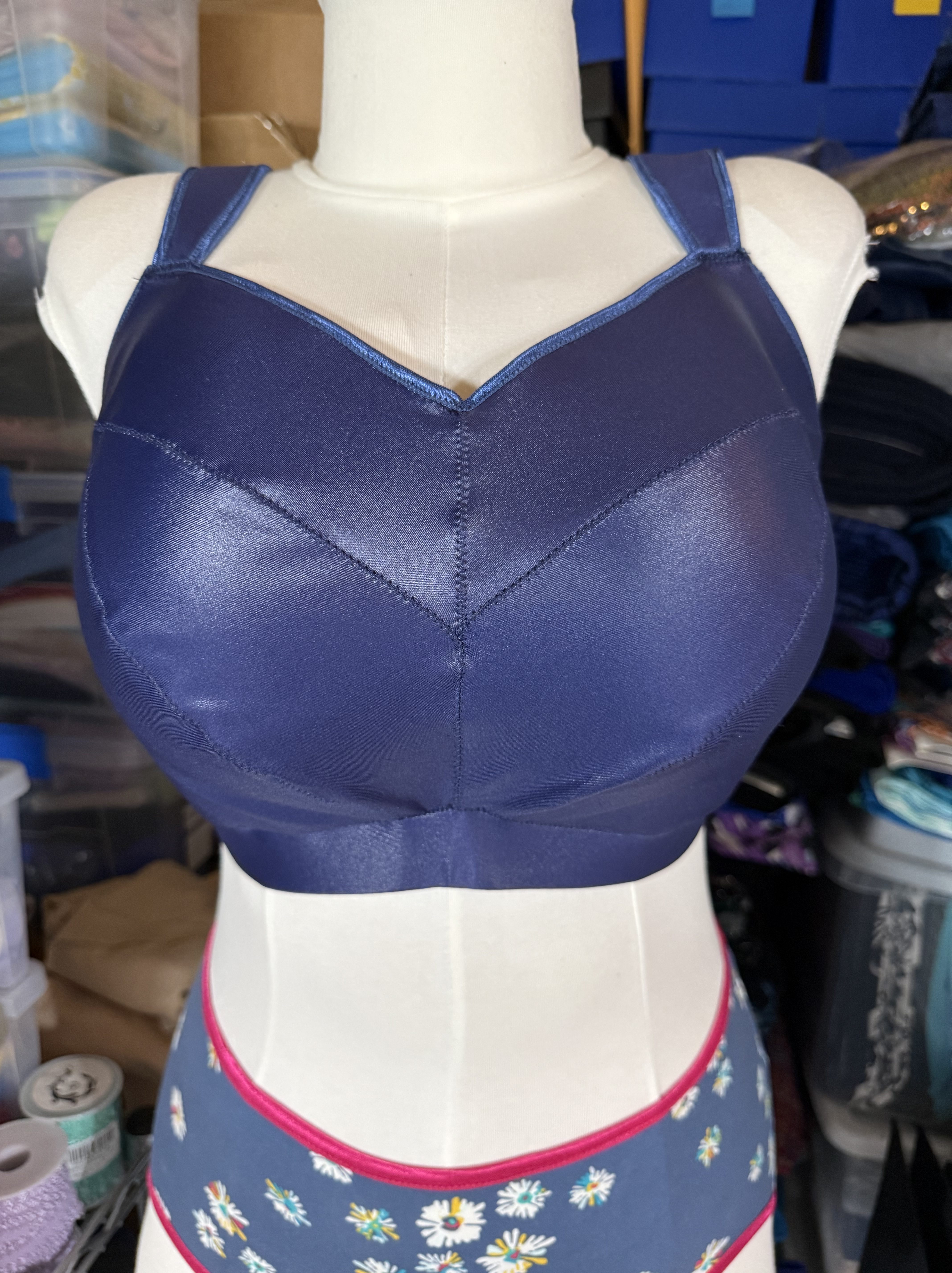
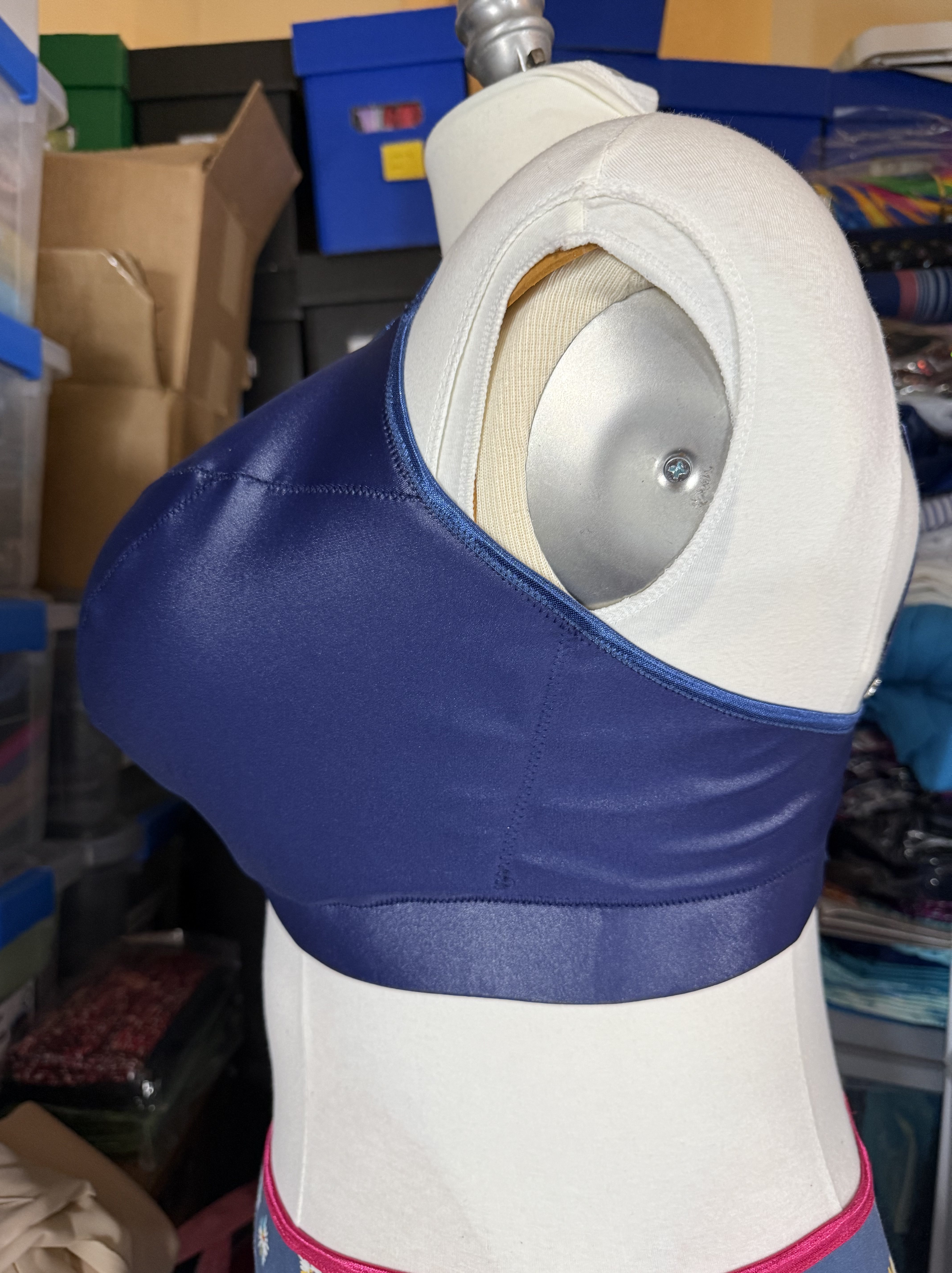
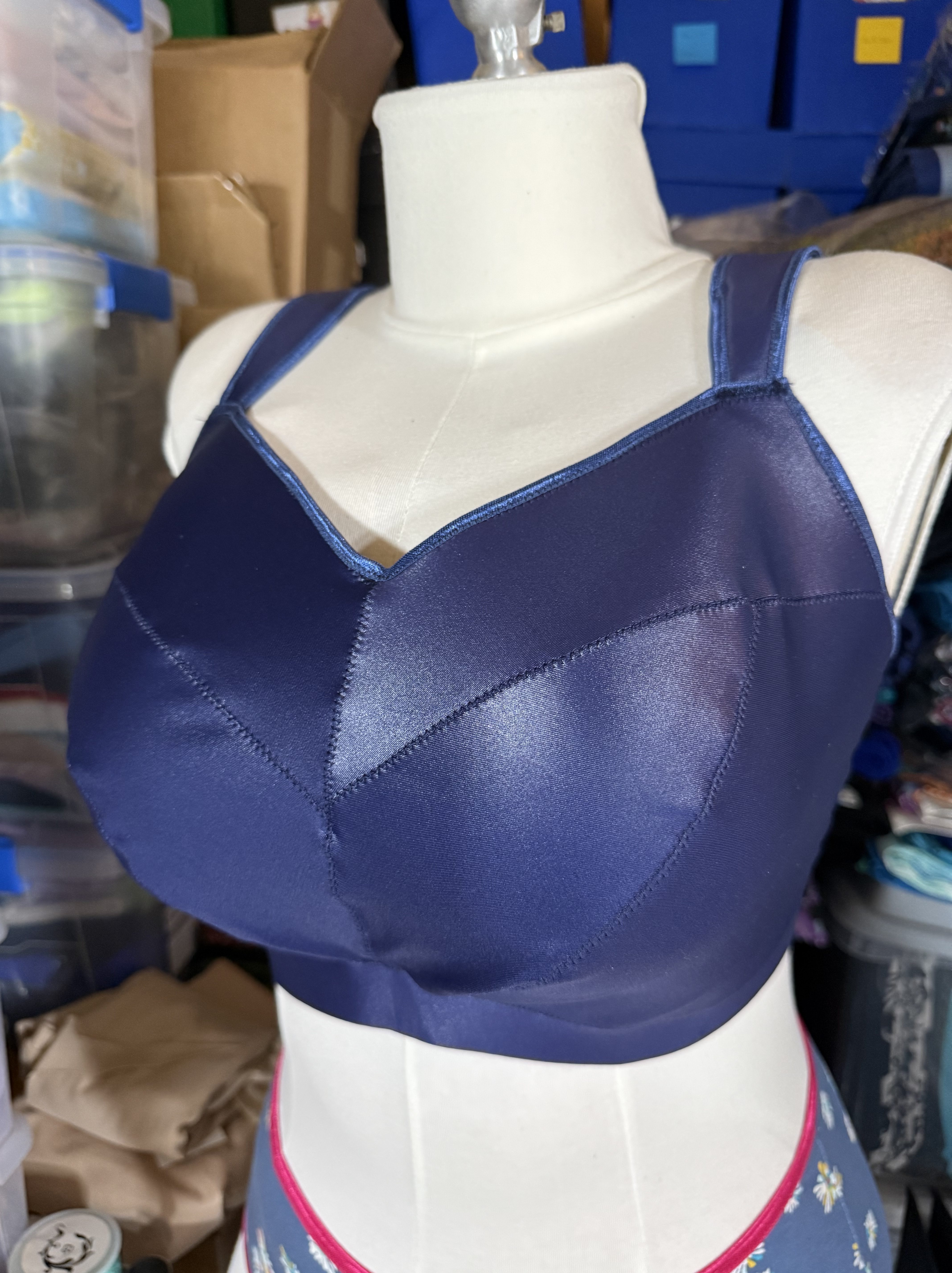
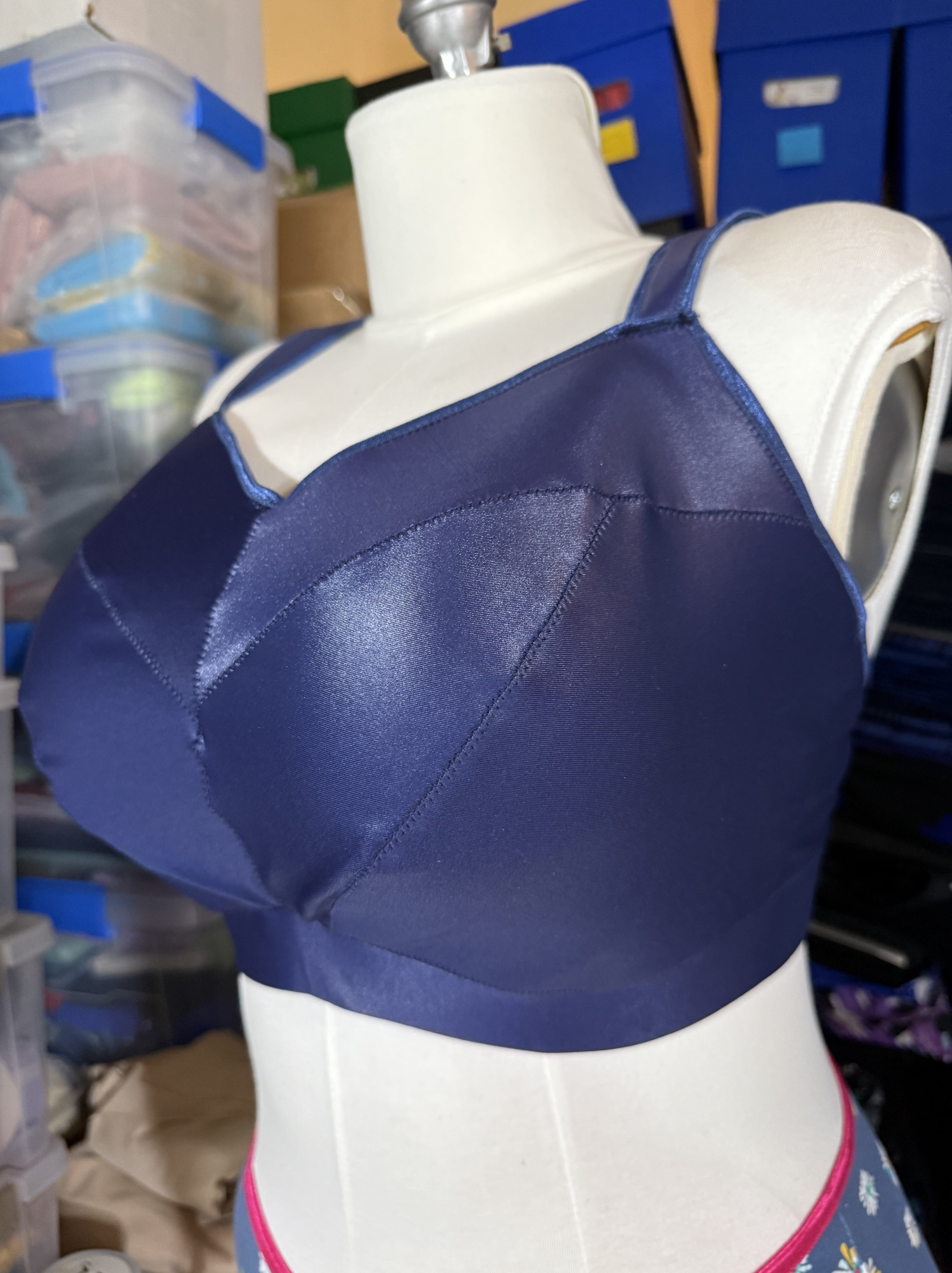
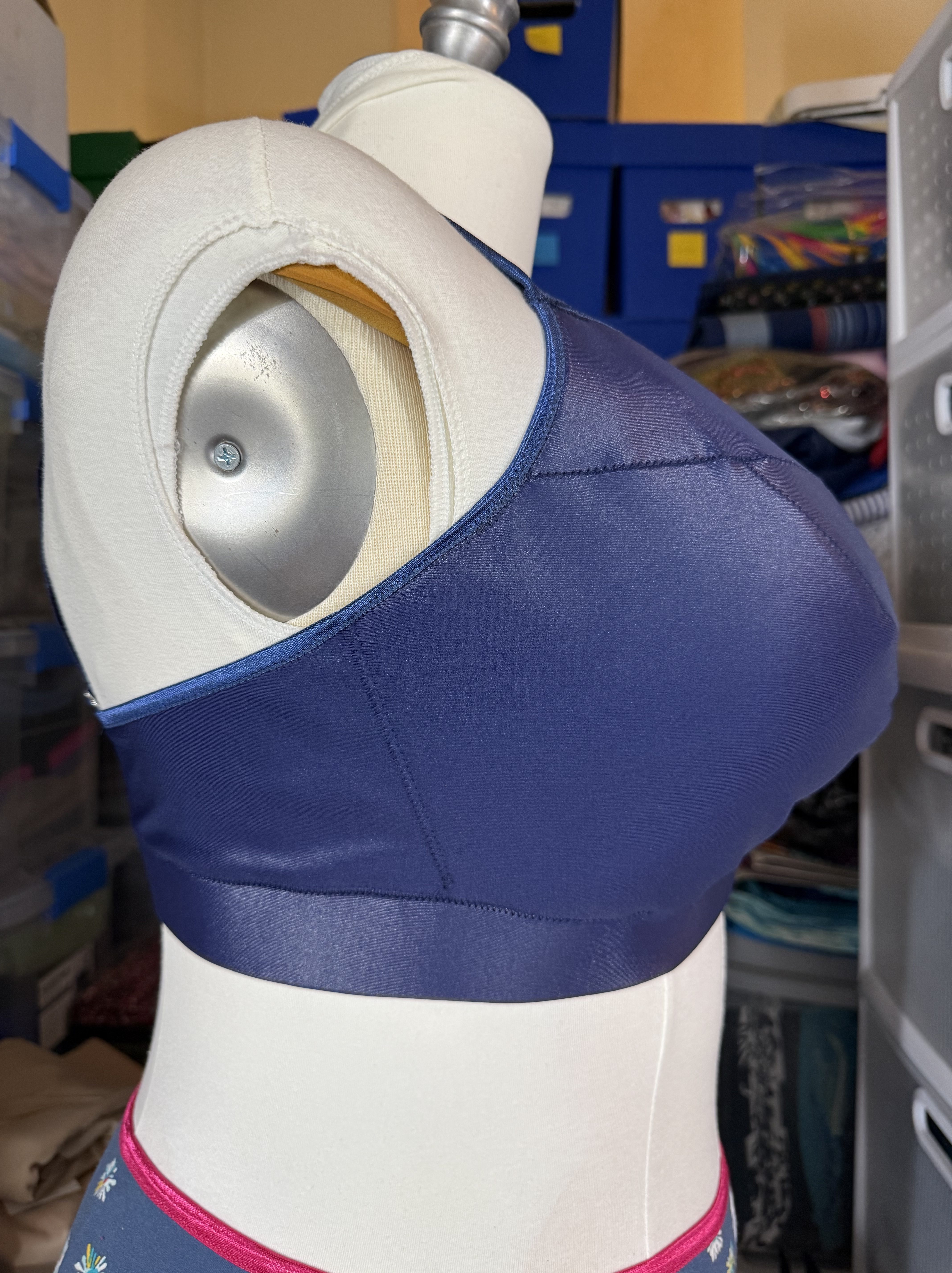
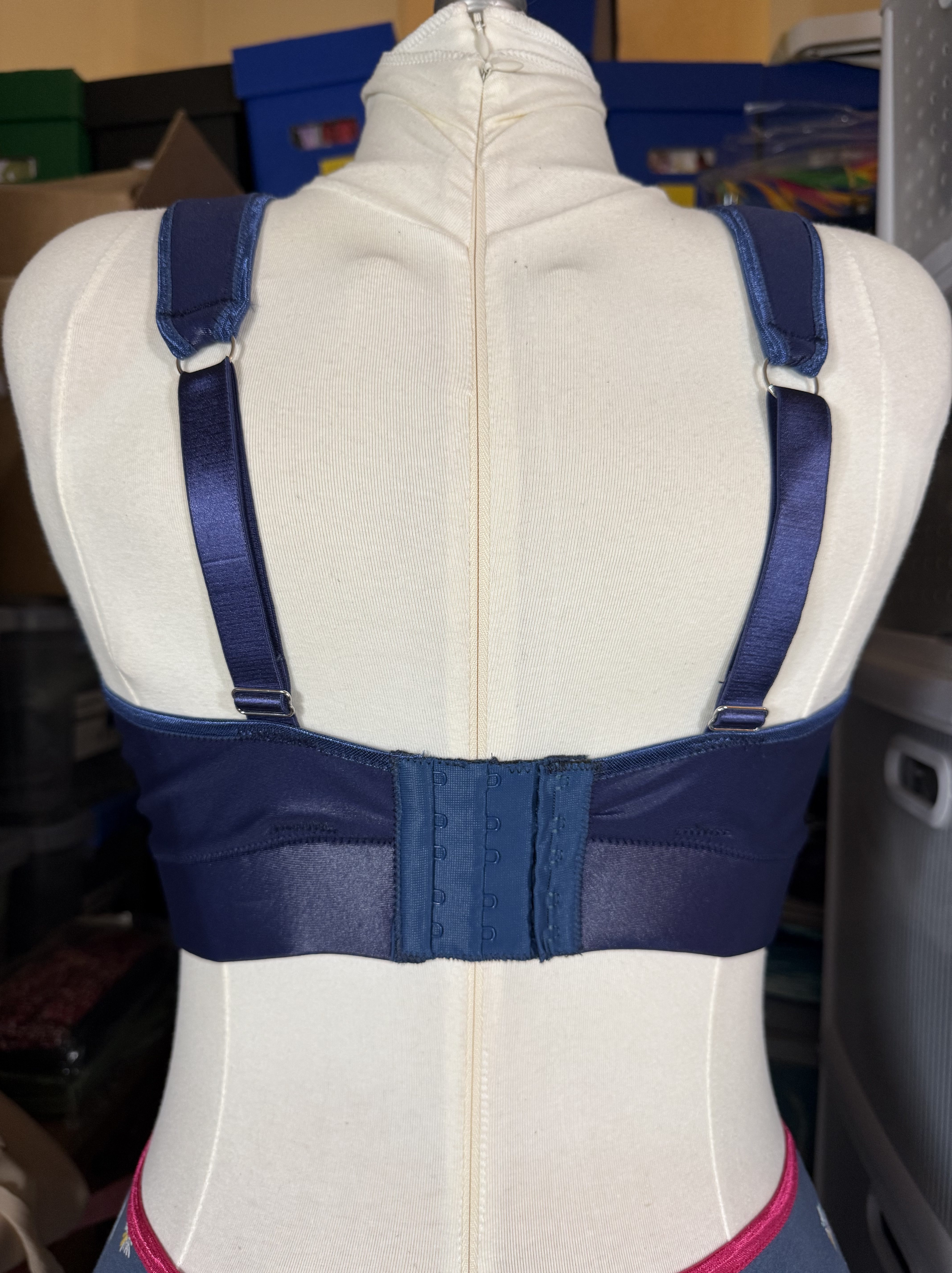
In the wearing, additional issues became more apparent. In general, the bra just doesn’t feel like it is providing enough stability during a workout. Even though I already adjusted the back to allow for a larger hook and eye, this pattern still feels front-heavy. I think it does a great job of keeping the tissue in the front and it does a great job of leaving a lot of space for the arms to be free to move, but it does mean there is a lot of weight in the front with a relatively small anchor point in the back. I don’t think this is a total fail (it’s definitely still wear-able, and will be good for low-impact activities), but I think in terms of what I am hoping for from a sports bra, there is still room for improvement.
Official Pattern Review
Pattern Description: The Ulla Sport is a sports bra pattern designed for foam with a stretchy fabric cover. It has interesting seam lines which give it a lot of shaping. From the designer: “Ulla Sport Bra is incredibly comfortable to wear – every woman should have at least one such bra in their wardrobe. Ulla bra gives a youthful “look” even in larger sizes. Easy to sew up and modify if necessary. Foam cup and side boning (optional) for the extra support.”
Pattern Sizing: The pattern comes in two size ranges. Size range A is the smaller sizes 65/26D – 90/36D and size range B is the larger sizes 75/30G-110/44D. I have found that the 90F size (from range B) from Make Bra tends to be a really good fit for me with minor adjustments, and the Ulla Sport was the same.
Were the instructions easy to follow? The instructions on most Make Bra patterns are generally pretty sparse, and they are for the Ulla as well. However, I think if you have made other bras or activewear there is enough information on the general construction order that they are easy enough to follow. The only step I found very fiddly and slightly confusing is the method for attaching the bottom of the foam layer to the bottom band seam allowance to tack it into place, otherwise the construction is pretty straightforward.
Did it look like the photo/drawing when you were done with it? Yes, I think it looks very much like the line drawing.
What did you particularly like/dislike about the pattern? I like the style lines on this pattern as I think they are interesting and not typical of other sports bra patterns. I also appreciate the size range for this pattern, because I think it is more extensive than a lot of other sports bra patterns. However, I find that this style of back (sometimes called a T-strap) and all-elastic straps that are recommended in the pattern are not as stable as I would prefer for a normal bra, let alone a sports bra, especially in the larger sizes. I have seen other versions that have converted the pattern to a racer back, and I would be interested in seeing if more coverage/support on the back would help with the feeling that this bra is very front heavy, however, I also really like having closures on my sports bras, because I find it really challenging to pull them off after you get all sweaty and gross while working out. I like the style of the bra, but I’m not sure how functional it will be as a sports bra without some further alterations. I also found that with my particular combination of athletic fabrics, elastics, etc. that my fashion fabric cover tends to pucker a bit and not stretch as tightly over the foam as I would prefer. I think this is mostly a technique issue on my end; I’ve covered foam before but I wasn’t as aggressive with the smoothing because of the shape of the “cups” on this pattern, and ultimately it allows the fabric to wrinkle a little bit. This isn’t an issue with the pattern, but it is something to note that I found a bit trickier to deal with on this mono-front foam structure than I do on individual bra cups that are used for most other patterns.
Fabric used: For the foam I used the thicker foam from Wawak which is stiffer and thicker than most other bra foams on the market. I also used a firm powernet to line the back band and a stretchy athletic knit for the cover/fashion fabric. This pattern uses fold over elastic for the upper edges and a thicker elastic for the bottom band, along with the typical strap elastic, rings and slides, and hook and eyes. I also used tricot tape to stabilize the seams and edges since I wanted to provide as much structure as possible to this bra without the use of hard materials (i.e., boning or wires), however I think I will leave off the tricot tape in the future as it makes the edges a bit scratchy and the tradeoff with stability doesn’t seem worth it.
Pattern alterations or design changes you made: I made a fit sample for this pattern and in general it fit really well. However, I realized that if this bra was actually going to be worn for any kind of intense activity, I was going to need to stabilize the straps, so I took one of the strap patterns from the Saharaa Bra and copied it to make a foam strap to use with this pattern. If you are in the smaller size range you may not need this, but if you are in the larger sizes you will likely want to make a stabilized strap or adjust the neckline to add connected straps to minimize bounce. The pattern doesn’t use much elastic to attach the ring to the top of the back band, which only gives it one anchor point. I made my elastic longer so I could attach it at two points and cover the raw edges with the serged seam allowance from the bottom band. I also adjusted the back for a slightly taller hook and eye, as is my preference, and I adjusted the bottom band elastic to use 1.5” instead of 1.25” elastic, purely because of what I had on hand. After making this version I also want to take a small dart out of the pattern at the underarm (a common adjustment for me on all nearly all bra patterns) and taking 1/4” out of the back band (another common adjustment I left off on this version because I was using a firmer powernet and I didn’t want it to be too tight). I would also change the construction order of the band in the future. The instructions have you insert the bottom band elastic into the channel after sewing the band fabric in place, but I think it would be better to sew the elastic to the band fabric first, then fold it in half and serge to the top part of the fabric cover. The problem with the channel method is that the wider elastic wants to bend and roll inside of the channel, which can be uncomfortable during a workout.
Would you sew this again? Would you recommend it to others? I am not fully satisfied with my first version, both in terms of construction and in terms of performance while wearing. I will probably sew this pattern again, but I do want to make some changes to the pattern first and test some other sports bra patterns as well before I start cranking them out. I do like the style and I think the fit will be really good with a few minor adjustments, but I don’t know if it has enough support for intense sporting activities. I really like that this pattern manages to push the tissue forward to really help with range of motion of the arms during activity, however, it is really not very good at controlling bounce and feels very front-heavy with almost no compression. Although I’ve sewn a lot of bras, I haven’t made a sports bra before, so I’m still looking for the right combination of materials, support, fit, and compression for activewear. I would recommend this pattern, but I think if you are in the larger size ranges, you may also need to consider stabilizing the straps or looking for options on modifying the back for more support.
Conclusion: I have been really enjoying all of the Make Bra patterns I’ve tried and I think the drafting and starting fit are great, but I don’t know if the Ulla Sport pattern is going to make my list of top tier TNTs. It has the potential to become a favorite pattern with some modifications to the pattern and to the techniques and materials I used, but I think I’m going to need to consider how I want to modify it for the next version. I am very much in need of new sports bras but I would like to try some other patterns before I come back to sewing the Ulla.
In some ways sports bras seem to be much simpler than other types of bras. Most typically don’t have an underwire, the cups tend to be simpler shapes to sew, and most of the other materials seem to be less specialized or at least already stashified if you do sew other types of undergarments. However, listening to an episode of the Underdressed Podcast quickly changed my mind, as their discussion about the features of a successful sports bra made me realize how complex they actually should be. It also made me realize why several aspects of this project did not turn out as successful as desired. Some of it I should have been able to see from the line drawing – the back and straps on this bra are tiny in comparison to the front; there was alway going to be some engineering challenges with stabilization. However, the idea that there needs to be a mix of encapsulation and compression on a sports bra does actually give me some interesting ideas for future projects. For myself, I know that I prefer wireless sports bras for more intense workouts, and that I need to have some sort of closure (the pull-on variety make me feel very claustrophobic). I know a lot of patterns recommend using boning for support, but I really prefer my workout bras to be fully wireless. I have quite a bit of pondering to do on this topic, and more than a few patterns in my stash ready to test out, so I’m sure I will return to the making of sports bras soon, though I do have quite a few other projects to blog about first. In real-time I’m probably going to play around with some other patterns and ideas soon; in blog time I don’t know how long it will be for me to come back to the topic of sports bras. So even though the Ulla was not quite everything I had hoped, the goal of making a successful sports bra has definitely moved up quite a bit in my list of upcoming projects that I’m excited to work on soon.


I’m with you on preferring sports bras with closures. I have one that has a front zipper–now that’s luxury! It also seems to have at least five different fabrics, from my casual inspection. Those things are pretty overengineered these days.
LikeLiked by 1 person
The style lines on the design are awesome – I could see this on a superhero.
LikeLiked by 1 person