I fell into the world of style typing systems several years ago, and since then it seems that the internet has become even more obsessed with them, and with the idea of finding your “personal style.” Although this concept really isn’t new, it’s been interesting watching newer authors and creators expand systems that were previously based primarily on the body structure or facial essences into something that tries to be based a bit more on personal taste. This seems to be the approach in Ellie-Jean Royden’s How to Dress Your Best.

Having been interested in the various style typing systems for a while now, it’s been interesting noting the evolution in the “personal style” space. Older systems (some going back to the 1950s, and possibly earlier) typically had one method and one system that they utilized for classifications. Kibbe (and the works that his system is built on) primarily seem to focus on the body structure, whereas the systems like the Kitchener essences are based more on the facial characteristics and, for lack of a better word, “vibes” given off by a person. All of these systems have also typically included some form of color analysis (be it the typical seasons or pulling colors from an individual), though there are some color analysts that exist separately from the typing systems. More recently, prominent internet stylists seem to prefer using a combination of all of the systems (such as Gabrielle Arruda, who describes these different systems as pillars of style), or incorporating more of an emphasis on personal taste. How to Dress Your Best definitely seems like it fits more into the modern trend of having multiple aspects to the style system presented in the book. It feels a bit like a mash-up of some of the older style systems such as Kibbe’s Metamorphosis and some of the ideas of newer style books like Bornstein’s Wear It Well.
The book is broken down into three main parts: “Find what you love to wear,” “Find what looks good on you,” and “Put it all together.” In the first section Royden introduces what is probably the most famous aspect of her typing system: the “Style Roots.” The Style Roots are broken down into eight types (Mushroom, Mountain, Earth, Stone, Sun, Moon, Flower, and Fire), which focused on different aesthetics that come across in the way you style yourself when you get dressed. In a brief and over-generalized way, I would describe Mushroom as somewhat minimalist, Mountain as structured and tailored, Earth as boheimian-ish, Stone as casual or sporty, Sun as colorful and bold, Moon as dark and Gothy, Flower as youthfully feminine, and Fire as mature femininity. Aside from describing the Roots, there is also a quiz to help you determine your Style Roots, and discussion about combining Roots and implementing them into your style. One thing that Royden points out is that while we may be drawn to multiple Style Roots (she even admits we all probably have some of all of the Roots), it’s best to try and find the intersection of the three main Roots to hone in on your personal style. She says that one or two Roots is a bit too stereotypical or looks like costume-y adherence to an aesthetic, whereas four or more Roots tends to not be cohesive enough to easily form or style an outfit. This section of the book is probably the most original and the primary reason I would recommend buying the book. I have a bit more to say on the Style Roots overall as a system, but I will discuss that later in this review.
In the second part of the book, Royden introduces the idea of the Body Matrix, which is similar to Kibbe’s system in that it focuses on the structural outline of the body silhouette, but is different in that the height, width, and curve are all independent and can be mixed to create 27 sub-categories. I think this is the weakest portion of the book. It sort of felt like the author wanted to make a concession that the way clothes sit on the body to create a silhouette is important, but didn’t want to re-write Metamorphosis, though she does acknowledge other style systems in this section of the book. Arguably, she gives the different Matrix segments about the same weight she gave the Roots and ends up giving to the color seasons, but practically it felt like she didn’t really want to spend a lot of time going through how to determine what category the reader might fit into. For example, the length/height metrics are long, medium, and short. Although there is a brief mention that people over average height are probably long, this may not necessarily be the case as the length determination is more based on appearance rather than actual numbers. This sort of feels like when people were debating if someone looked tall before Kibbe’s Power of Style came out and in no uncertain terms said if you are tall, you have vertical length, period. Similarly, in the case of width, it is not clear how to determine if one is wide, narrow, or medium. What comparisons are we making for this determination? Does relative weight factor in or change this? The whole system seems very nebulous and I still don’t feel that I have a good understanding of the Body Matrix, nor am I confident in where I ended up with my self-diagnosis for this portion of the book. However, I also don’t know that I care enough to stress over it? There are some recommendations made in this segment (which come into play in Part 3), but for whatever reason knowing if I’m long-wide-round or long-narrow-round doesn’t seem to matter much in the grand scheme of things. Which I realize is a bit weird to say as someone who’s done the deep dive on Kibbe, but maybe that’s why I don’t feel too obsessed here. That or the naming convention just doesn’t stir the imagination in the same way as Kibbe’s or Kitchener’s nomenclature. Honestly, if you go through this book and get to the word exercises in the third part, I would say to just do your best and not worry about it too much. This section also includes information about color seasons and gives a quiz to help narrow down color typing. I don’t find the quiz to be too helpful but I do think that Ellie-Jean’s YouTube video on DIY color draping methods is actually pretty good. I tried the digital “bubble head” method she mentions in the video to color type both myself and my sister and actually that was one of those “it all makes sense now” kind of moments. So, while I don’t think the color section in the book is bad, I also don’t think it’s the most helpful in terms of being able to implement the advice in the book into practical real life actions.
Finally, in the third section Royden discusses how to “put it all together” with a lot of the wardrobe curation advice that is becoming common in most recent style books. She starts with an exercise where you collect all of the words from each of your Style Roots, Body Matrix, and color season, and see what themes pop up repeatedly, but also which words resonate as something that you particularly want to incorporate in your personal style. Once you pair down this list, you have a more focused idea of what to think about when going through the next steps of curating your current wardrobe. After this, she discusses how to assess if clothes are in your inner, middle, or outer ring. Inner ring clothes are essentially the best versions of wardrobe staples – they fit your Roots, Matrix, and colors, and work well with the style goals you should be working towards using your list of words. Middle ring clothes have some but not all of these attributes, and should be thought of the “good enough for now” items that ideally will be replaced or (thoughtfully) upgraded as you work to further curate your wardrobe. Outer ring clothes are necessary, but not part of the core style (for example, workout clothes or very formal clothes like a wedding dress; you need them for specific functions, but they aren’t necessarily what you would wear day to day when you think of “putting an outfit together”). From here she goes through the aspects of curation, such as how to get rid of clothes sustainably, how and when to purchase clothes, how to store clothes, how to deal with trends, and how to put outfits together. Although page-wise this seems like the shortest portion of the book, it is also the most dense and actually feels pretty full of rather practical information. There wasn’t anything groundbreaking in this section, but it was fairly robust and definitely worth the read.
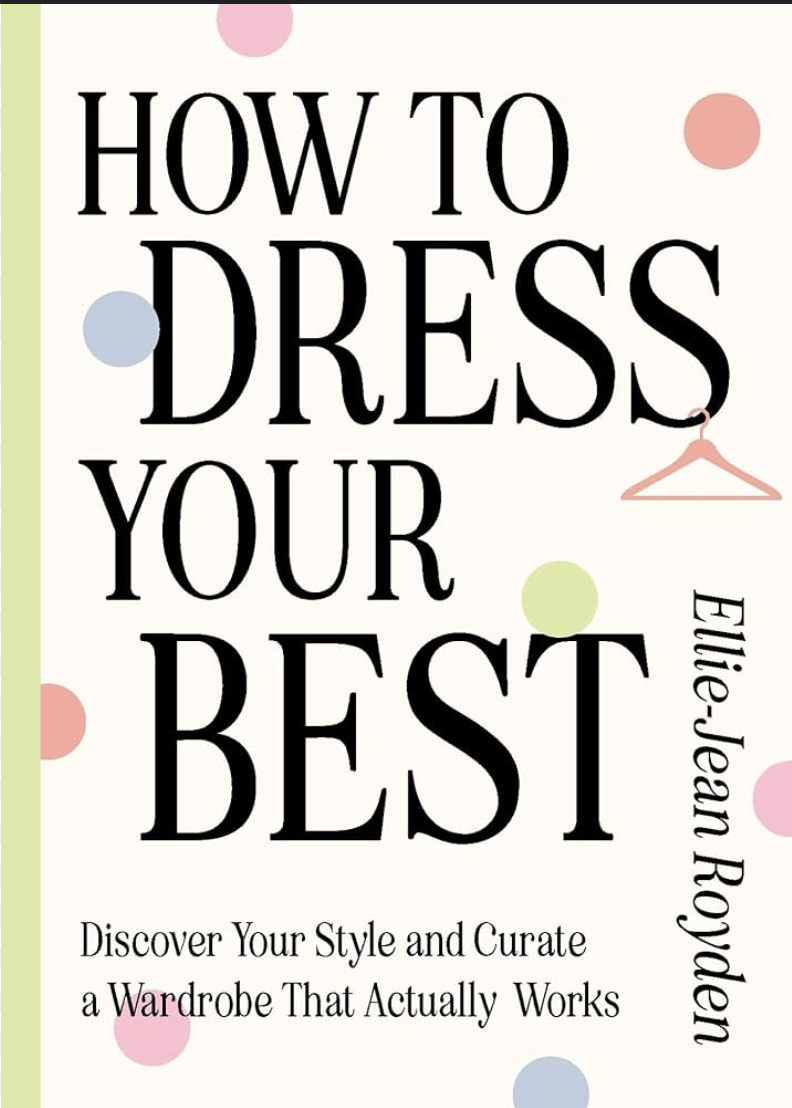
I’m going to move away a bit from a more objective review and go into my personal experience playing around with the Style Roots system. I first heard about the Style Roots either on a style podcast or on a YouTube video a while ago, and I will admit, at first I thought it didn’t make any sense. I didn’t understand the Roots, I was really confused about the combinations, and I really didn’t see how they would be helpful at all in determining a personal style. I sort of wandered around a bit until I saw a video from Mili Velikova (who’s channel I’ve really been into) doing a deep dive into the Style Roots system:
This made more sense to me than anything else I’d seen up to that point regarding this system, and so I started doing a bit more of a deep dive, taking online quizzes, and eventually deciding to read the book. I will say, I have found that it’s been pretty easy to identify my two primary Roots (Mushroom and Mountain kept coming up for me), but I found I was floating around a bit on the third depending on what tool or quiz I was using to determine them (Moon and Flower came up on some quizzes, whereas Fire, Sun, and Earth came up on others, and I was also toying with Stone based on the book descriptions). Eventually I resorted to looking at Ellie-Jean’s Pinterest boards for each three-way combination of Style Roots, and narrowing things down that way. I realized I really wasn’t drawn to any of the boards with Flower or Stone, and very few with Earth, whereas I had a lot that I liked from boards with Mushroom-Mountain or Mountain-Fire mixes. At this point, I’m pretty convinced that I have a Mushroom-Mountain-Fire Roots mix, though I think there are some elements of Moon, Sun, and Earth that I appreciate as well.
I’m not sure if it’s just because I’ve been thinking about it a lot more with the books I’ve been reading and reviewing this year, or if things are finally just clicking, but I feel like I finally sort of get it in terms of what I want from a wardrobe. I don’t know how to describe it other than the feeling of contented acceptance. Previously, after learning about a system and trying to see where I fit in, I always felt like there was an air of questioning, like “Did I get this right? What if I’m really something else?” that led to constant questioning and re-assessing. With Kibbe’s system I started off thinking I was Soft Classic, moved to Soft Natural, and was told by various people on the internet that I was Romantic. But with the updates in his new book I could only be in the Soft Dramatic category, and it just kind of felt right. Similarly, I’ve been playing around with various color typing systems and hopped between thinking I was Bright Winter, True Winter, and True Summer, but when I played around with the digital color draping the obvious color season was Dark Winter. And again, it just seemed right, both in terms of what visually looked good and what I wanted in a wardrobe. With the Style Roots, I’ve started pulling together outfit inspirations that match my Roots, and I have a bunch of images where I think “I would totally wear that.” I even found that using the Style Roots helped me with the Allison Bornstein 3-Word method. I struggled a lot to come up with three words, because, truly, I couldn’t articulate what I wanted. But pulling one descriptive word from each of my three Roots I ended up with “Effortless-Mature-Glamorous” and this feels like a much better starting point than the hand-wavy shrugging I was doing previously. It even fits in the practical-aspirational-emotional format; Mushroom is my practical root and the one I tend to overdo in my day to day, whereas Mountain is the aspirational root that I would like the wear but struggle to incorporate because it feels to formal, and Fire is the emotional root for how I would like to feel but I often shy away from because I’m afraid of overdoing it. Figuring out how to combine these in a ratio that works for me feels like a worthwhile goal for the next phase of wardrobe planning and refinement.
In terms of the rest of the book, I largely don’t plan to do much with the Body Matrix information, but I did find that going through the exercise of collecting all of the words for everything that you considered as part of your style was surprisingly insightful. I had a long list of words, but pulling things out for my repeated word style themes I had a much clearer picture. Some of my thematic style words are: balanced, clean, jewel, minimal, neutral, powerful, simple, and smokey, though I also found I gravitated to words like effortless, elegant, understated, sophisticated, mature, dignified, tailored, and glamorous. Identifying more concrete key elements I was able to make a list of various types of wardrobe items (such as button down shirts, v-necks, pencil skirts, etc.) that showed up multiple times on the recommendations lists or that I know I particularly like. I think this can help in terms of creating that inner core wardrobe or adding variety into a wardrobe (for example, I have a v-neck and a turtleneck, but I don’t have any sweetheart neckline tops, so it might be a good style to try to add), as well as with having an overall impression of the kind of style I’m hoping to achieve. Moving forward I’m hoping to come up with some key wardrobe inspiration images and then plan out some sewing projects to help fill out my wardrobe, especially now that many of the garments I tend to wear a lot are several years old and starting to show their age.
So, where does that leave me in terms of an overall book review? Obviously, I found this book helpful in terms of my personal style journey. Although I found the Style Roots to be a confusing system at first, I actually think it’s helped me quite a bit in terms of being able to understand why I’m drawn to certain things. Interestingly, I was discussing this system with my sister as well, and I think she went through a similar process of it being confusing and non-sensical to completely transforming and clarifying her wardrobe goals. We also went through the digital color draping for her (she ended up as Soft Autumn) and this also seemed to explain so much in terms of what she has been gravitating to in her wardrobe of late. So I can’t say that I didn’t find the concepts in this book helpful. However, one thing I would criticize is the lack of visuals in the book. There are images, but they aren’t as instructional as they ideally could be. I think much of the book relies on descriptive words, which, frankly, can be left quite a bit up to interpretation. On the one hand, I think this may be intentional to allow you to mentally visualize your own style without too much influence. On the other hand, since style and dressing is inherently a visual medium, it is a bit challenging to rely solely on descriptive words, especially when it comes to the section on colors. Similarly, I don’t think I could have fully understood the Style Roots from any one source. The book helped explain the Roots such that I understood what they were, but understanding what that meant in terms of an outfit really benefitted from many of the various YouTube videos that exist about this system, and finding my own Roots really wouldn’t have felt as possible had it not been for Ellie-Jean’s Pinterest boards showing the various combinations. I’m not saying that the supplemental materials aren’t helpful, but I also don’t know if they should be practically required to fully understand the system that is being sold in the book.
For me, I think this was the right book at the right time, but I don’t know if I would necessarily recommend it as a must-read. I think if you want an extremely prescriptive Style System this may not be the best option for you. However, if you don’t like the idea of these systems telling you what to wear but you do want some sort of guidance in terms of narrowing down what you want to be wearing, the Style Roots may be a good system to explore. It’s based a lot more on what you like, as opposed to what the system’s creator thinks will look good on you (except for cigarette pants; apparently she thinks those look good on everyone because that recommendation came up a lot). If you really use the word filtering exercise to come up with style themes, I think you can really come up with something that does feel like a personal style. So overall I’m glad I read it and I would recommend it if you are looking for a new take on style systems, but I will say that I think a lot of the information can also be obtained online from other resources if you want to do a bit more research before acquiring a copy of the book.


Thank you for the in-depth review! I’d not heard of this system before.
LikeLiked by 1 person
Interesting. This kind of approach, where you try to identify one or several types and then follow the prescriptions, never really appealed to me. I find I do better with constraints: X, Y, and Z don’t work for me (for reasons of temperament/taste or “figure flattery”), so as long as I avoid them, I am free to do whatever I choose. Of course in my case, what I tend to choose is not super-varied, as I have an extremely boring color palette. But at least there’s the illusion of great freedom!
Also, “Mushroom”?!
LikeLiked by 1 person
Gah! WordPress either ate my comment or submitted it as ‘anonymous’ and it probably went to moderation. What I said was that this type of approach, where you try to identify a type or several and then follow the prescriptions, has never worked for me. I do better with constraints: as long as I avoid X, Y, and Z (for temperamental/taste reasons, or “figure flattery”), I feel free to do whatever I want. Of course what I want tends to be a bit dull, certainly in terms of color choice. But at least there’s the illusion of great freedom!?
Why “Mushroom”?!
LikeLiked by 1 person
And what’s going on with my !punc?tuat
LikeLiked by 1 person
I’m assuming because mushrooms have a cute emoji 🍄 and she uses emojis a lot in her online writings… And I think mushrooms have a sleek looking organic form (I know there are lots of varieties of mushrooms and they all look different but they are less ostentatious as a rule compared to flowers). But believe me, the first time I heard about this system I thought it was totally nuts 🥜 (which also has an emoji, but it isn’t a style root 😅). Once I sort of got past the naming conventions it made more sense to me. But, I will say, even though Kibbe has said it’s outdated, his original list of recommendations from Metamorphosis still feels like most relevant list of recommendations for a starting point and silhouette, and then I can apply this system on top of that to try and see if its giving the overall impression I’m hoping for. At the very least with all of these style systems my wardrobe color palette is starting to coalesce and it’s really pretty when I open my closet, so that’s been kind of exciting.
LikeLiked by 1 person
I guess most people are used to grocery store mushrooms… In the Northeast, we have some really trippy, flamboyant looking ones. Bright yellow clavolinopsis tendrils, purple poliozelli, orange and bright red agarics with little white ballet tutus… Chicken of the Woods looks like a giant pink brain. Nothing minimalist about them.
LikeLiked by 1 person
Haha that makes sense. I definitely think she was channeling Portobello or White Button mushrooms when she came up with the naming system 🤣
LikeLiked by 1 person