It’s been a busy and challenging past few weeks. But I’ve been trying to find places to sew around the crazy, just to keep from going insane. And now that I’ve had the finished wearable versions of the Bravo Bra #2 and the Willowdale and had a while to test how they fit during daily life, I have some follow-up thoughts on those patterns, as well as ideas for what I want to try next.

Between the Willowdale and the Bravo Bra, the Willowdale has come out as the clear winner for me. I’ve already made a second version, and I’m really liking how the pattern is shaped. However, that being said, both of these patterns still have a bit of fitting weirdness. Neither really feels “right” yet around the wire line. The closest is certainly the lavender lace Willowdale which uses the 38 Omega wire from Emerald Erin, but none of the bras I’ve made feel like they are sitting at the correct position.
So, where to go next? I’ve decided it’s time to go the self-drafted pattern route to further my journey of fit exploration.
I was really curious to try the Beverly Johnson drafting books, but I wanted to see what else was out there. I watched and read some reviews on different bra pattern fitting and drafting books, and I decided to try the Porcelynne “Bare Essentials” pattern drafting book first. One of the reviews said the fit was “scary accurate” but that they preferred the Porcelynne method for drafting individual custom fit bras, whereas they felt the Beverly Johnson books were better if you wanted to make a pattern to sell and grade between multiple sizes. The Porcelynne book does discuss grading, but for the drafting portion there are a lot of specific measurements and calculations that come from choosing a wire size and body measurements, so I can see how that may not be the best option if you wanted to create a generalized pattern to sell. After making this decision I’ve read further reviews that indicate the Beverly Johnson may have more information related to my particular fit issue. But since I’ve fallen down the rabbit hole this far, I would really like to compare the two different books myself and do a general write-up and review on the blog, so that’s definitely coming up down the road.
In the meantime, I’ve jumped into the start of my first bra drafting project with the Porcelynne method. I’ve done a lot of the measuring, and started on the calculations, but one of the key aspects was choosing the wire type and size. Of course, since I went through my wire fitting trials, I had to wait on the actual drafting part of this until after I had chosen a wire to draft for. There are a lot of calculations, which I mostly did on my own working through the book, but I also had a bit of a cheat to confirm my calculations using the calculator on Procalynne’s website as well. For my initial draft I used a size 38 Vertical Long wire, as it’s the closest to the 38 Omega that I used in my most recent Willowdale, which had (I think) the best fit of the three most recent bras I made, and visually, it’s the wire that most closely matches my root trace.

Drafting the front cradle and back band was actually a pretty quick process. Drafting the cups… took quite a bit more effort, but I was able to finish most of it in a (long) evening’s worth of work. And you know what? It looks like a bra pattern! A tiny bra pattern, but a bra pattern nonetheless.

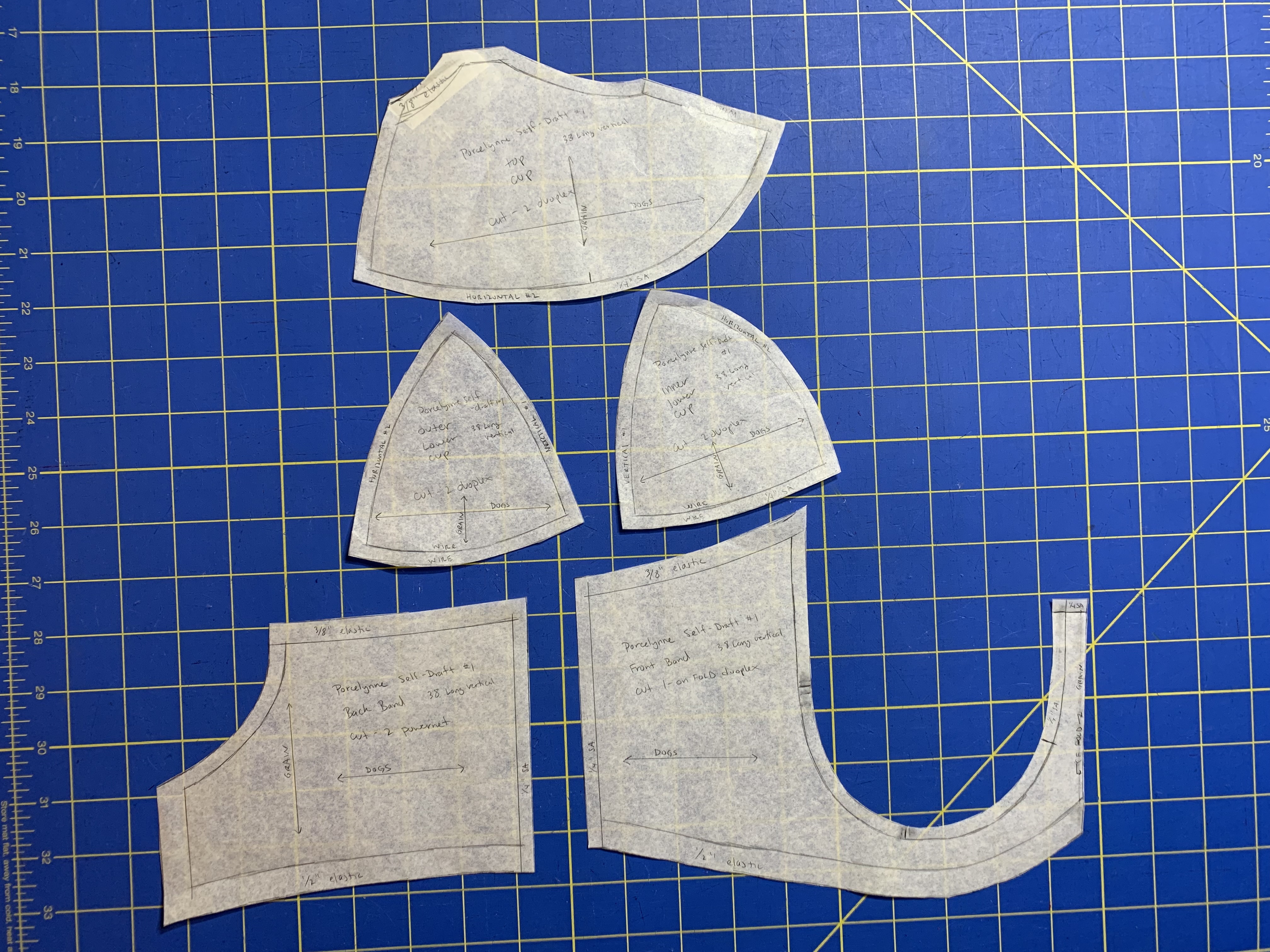
I was honestly really pleased with the way the band turned out – it really does look like the commercial patterns I’ve been using, if much narrower on the wire line. The cups looked suspiciously small though. For comparison, here is the self drafted pattern next to the Willowdale:

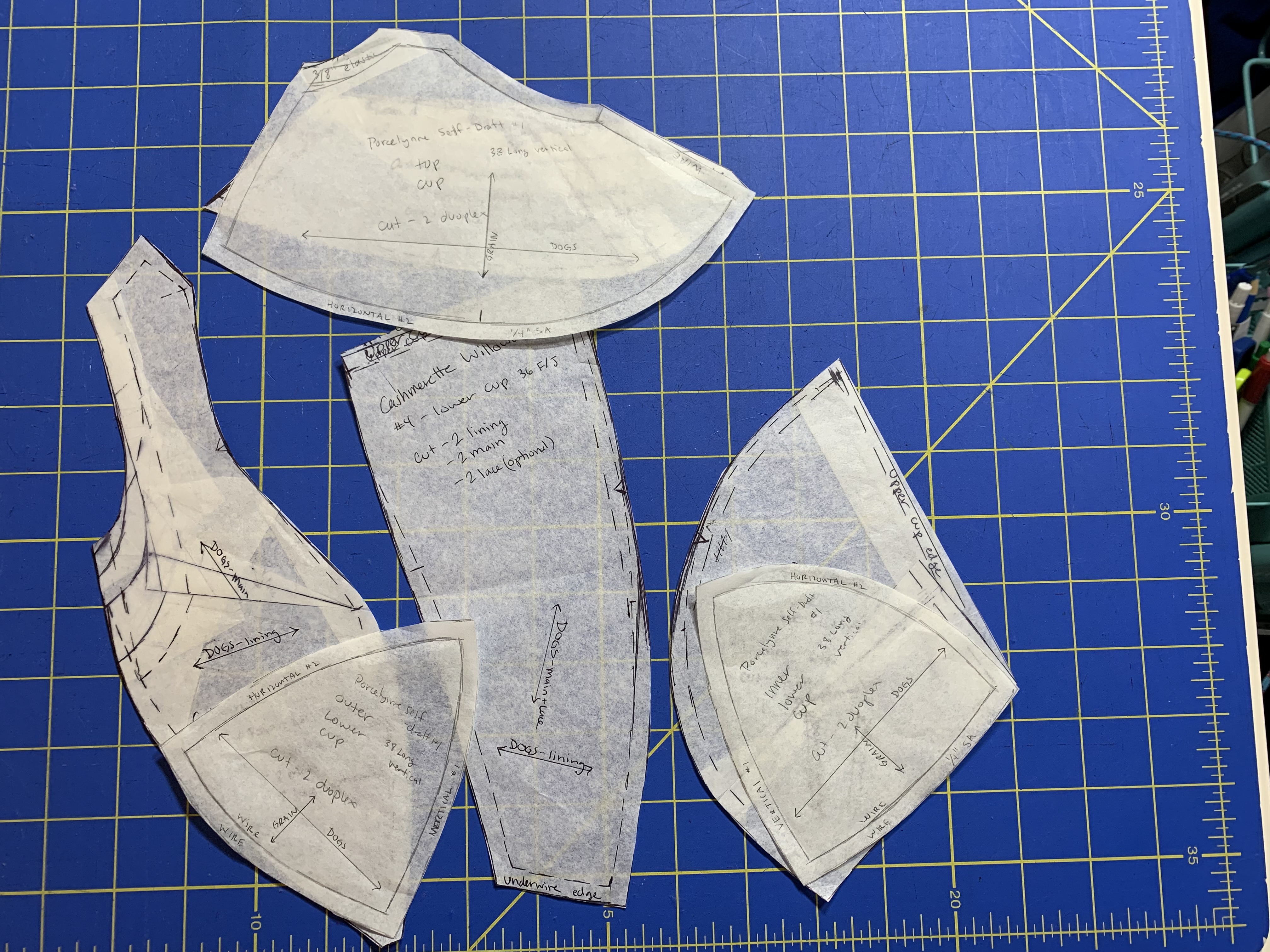
You can definitely see how much narrower the wire line is on the self draft, and how some of the width around the body has been re-distributed between the front and back pieces, though the overall is pretty similar. The cup pieces though…. I was highly skeptical that I could lose that much volume from the cup and have it fit, so I made a paper cup to visualize:


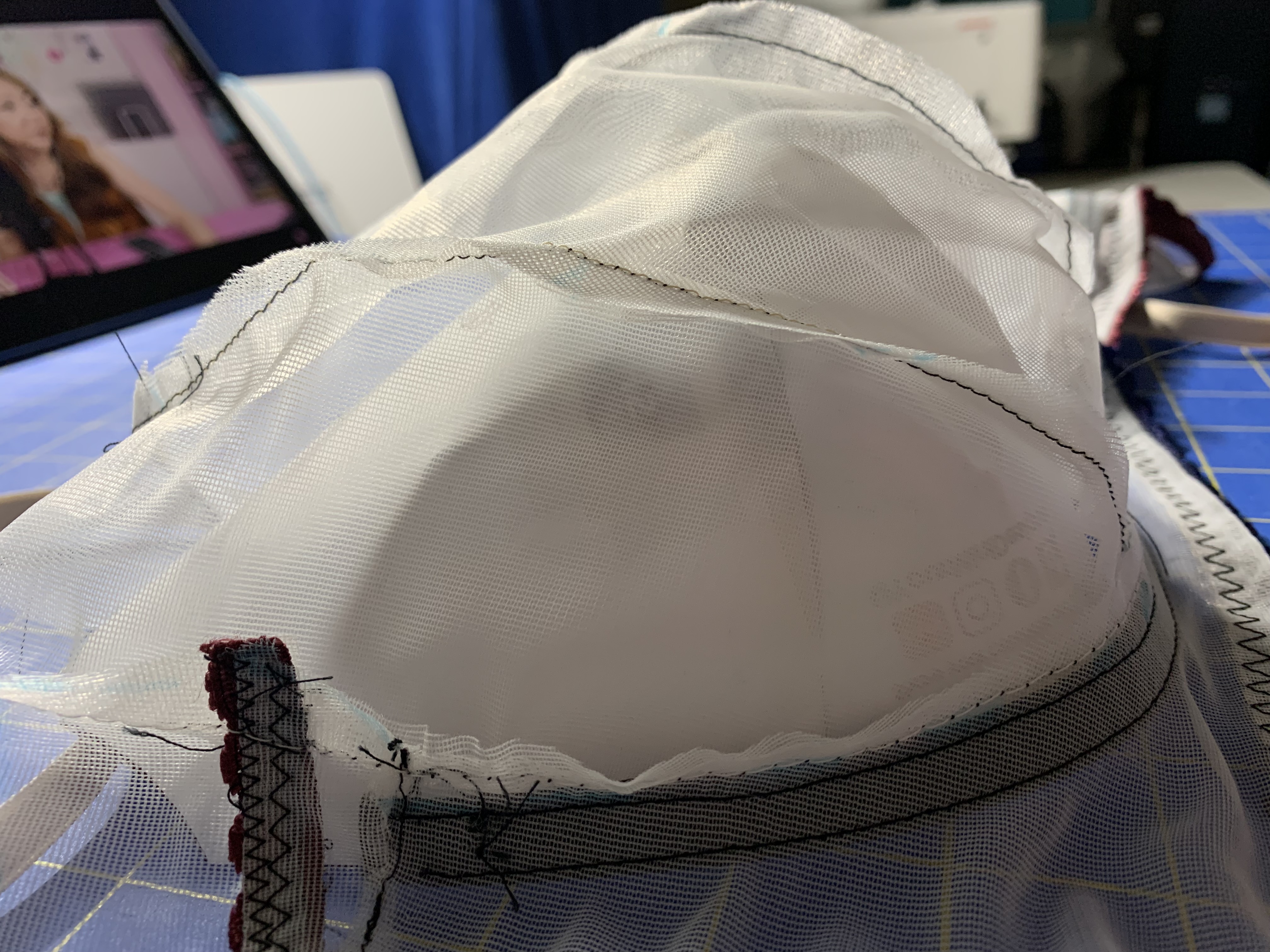
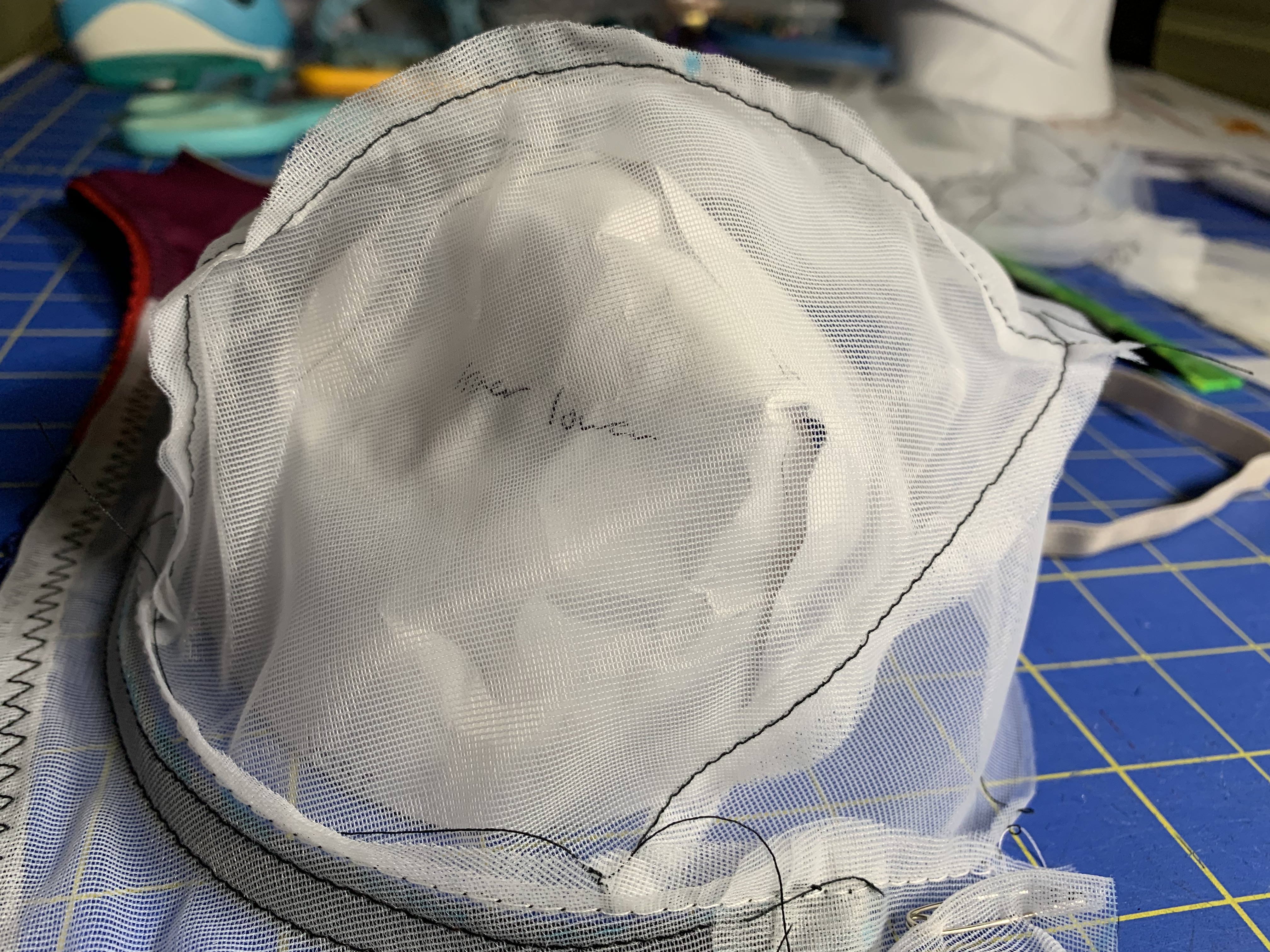
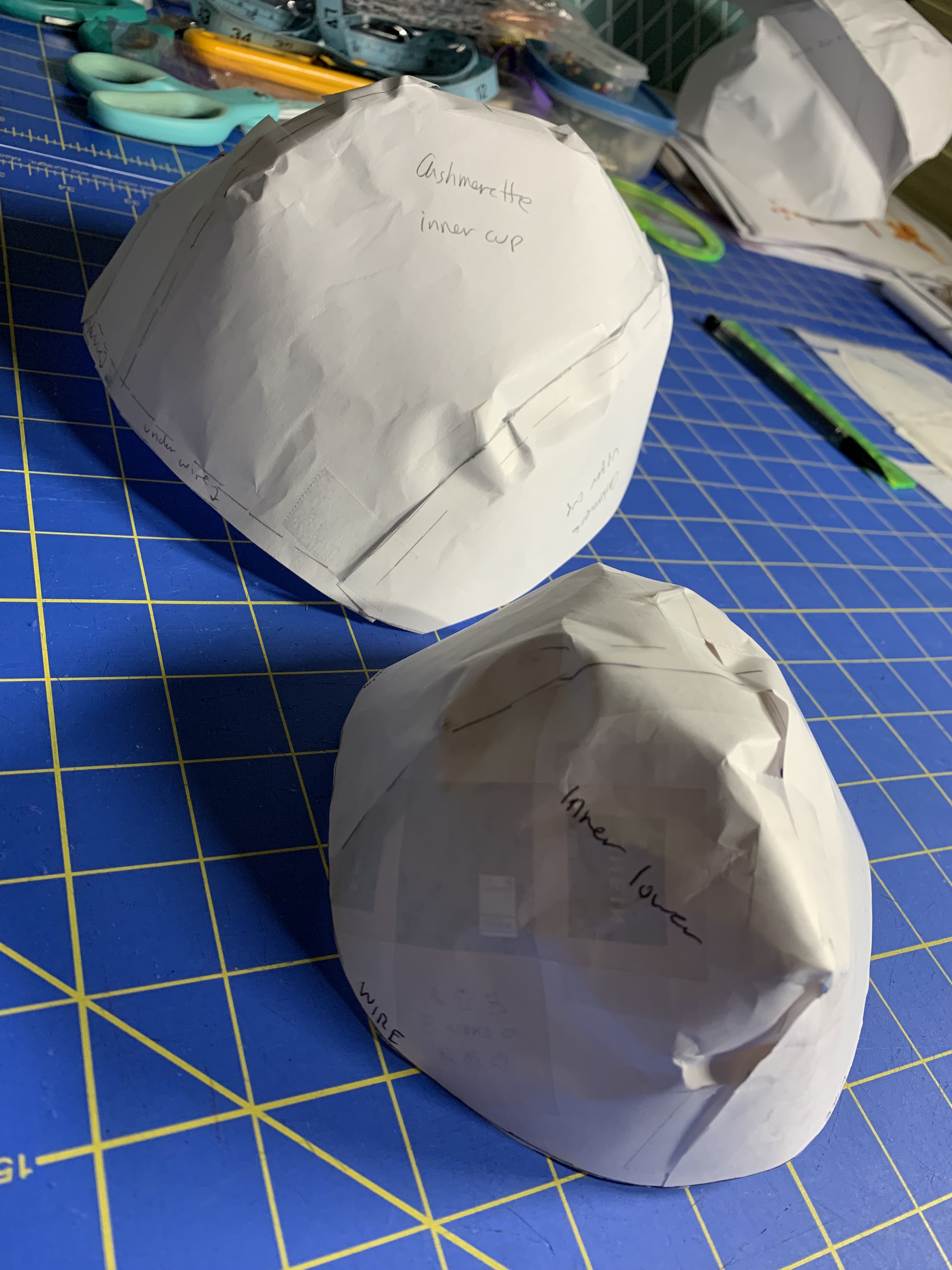

Ummmmm, yeah. Even though I ended up taking out a lot of volume from the Willowdale initial cup draft, it definitely wasn’t that much. The paper cup very neatly fits inside of my final Willowdale test cup with tons of room to spare, and even just holding it up to compare to my body was laughably small.
So, at this point I felt like I had 2 options. Option 1: try to figure out how to add 2″ in each dimension to give an FBA to the cup, or Option 2: modify the Willowdale cups to fit into the new band to test the pattern. It’s probably a bit of a cop-out, but I went with Option 2. The modification to get the pattern pieces to fit in my new wire line actually weren’t too much; I just needed to remove about 1/4″ from each of the seam lines:

With this, I decided to make another mock-up pattern to test the new fit. And honestly? It wasn’t too bad! The band itself is a good length, and though I may want to move the straps towards the center on the back, generally speaking the sizing and shape of the band was super comfortable.


The fit around the wire line was still a bit weird though. After having what felt like almost success with the most recent Willowdale, trying the 38s in the pattern that was actually drafted for a size 38 wire left them feeling way too small! I’ve been doing a lot of research into wire fitting issues lately (YouTube, blog posts, webinars… it’s been a month and I have definitely been over compensating managing my feels with sewing time), and they all seem to be hinting at the same thing – if the wires are sliding down they are probably too big. However, one topic that’s been discussed here and there is the idea of wire spring – how much the pattern pulls away from the vertical to sort of pull the wire ends further apart as it wraps the bra around the body. Some patterns (like the Pin-up Girls patterns) have a fair bit of wire spring, whereas other (like the Willowdale) do not. I have generally been trying not to include wire spring in my latest patterns, however, I think that based on the comparison of the Willowdale and self-drafted cradle I have probably been doing so.
If both of these patterns take the same wire, clearly the Willowdale is going to force the wire to open up a bit more to follow the arc of the pattern. I think this is part of the reason why I kept going down to a smaller wire… if the larger “correct” wire size kept feeling too big because it was being sprung open, then the smaller wire would force the too large opening to be pulled back into an almost correct shape. One comment from a recent webinar was really a lightbulb moment for me. It essentially boils down to the idea that it’s really hard to isolate fit issues in a bra because a lot of the components have to interact to generate the tension forces to create “fit”. I think this is especially true with the wire fitting issue here.
As part of my testing, I did spend another night swapping out every wire left in my collection in the new test bra, more or less. And, somehow, I think I ended up back where I started because I decided to test out a draft for a 44 Vertical (Bliss) wire next, which was the size I thought I was originally! The 44 Vertical and 38 Vertical Long are actually pretty comparable in overall total length, so I don’t think this will change things too much beyond the shaping of the bowl for the wire, but I still needed to start over to see. And re-drafting the cups with the different wire size felt like a solid plan; maybe it would give me something wearable?
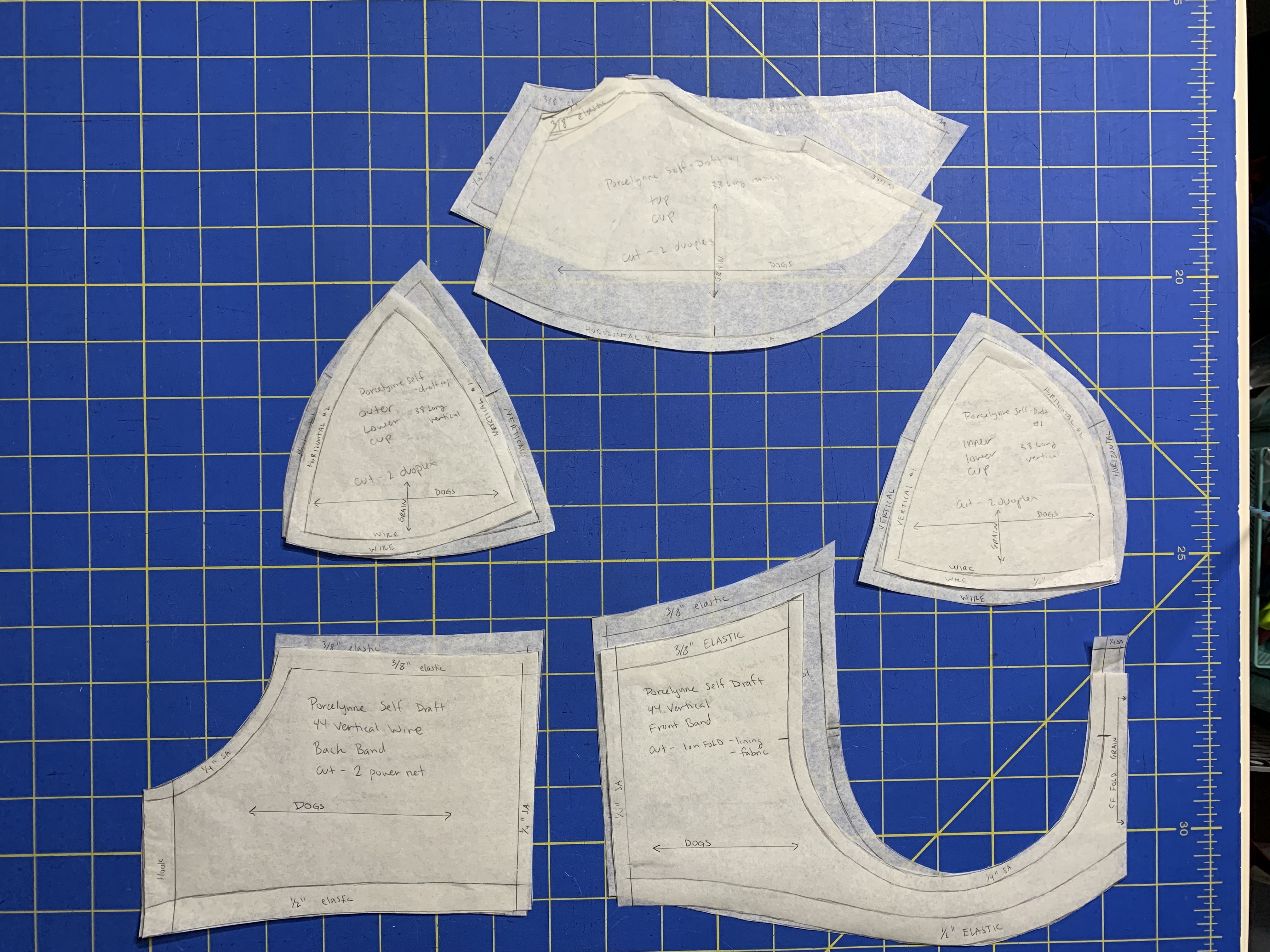
So, here is my newly drafted 44 Vertical Wire pattern:


Which is both fairly similar and interestingly different from my first self-draft:
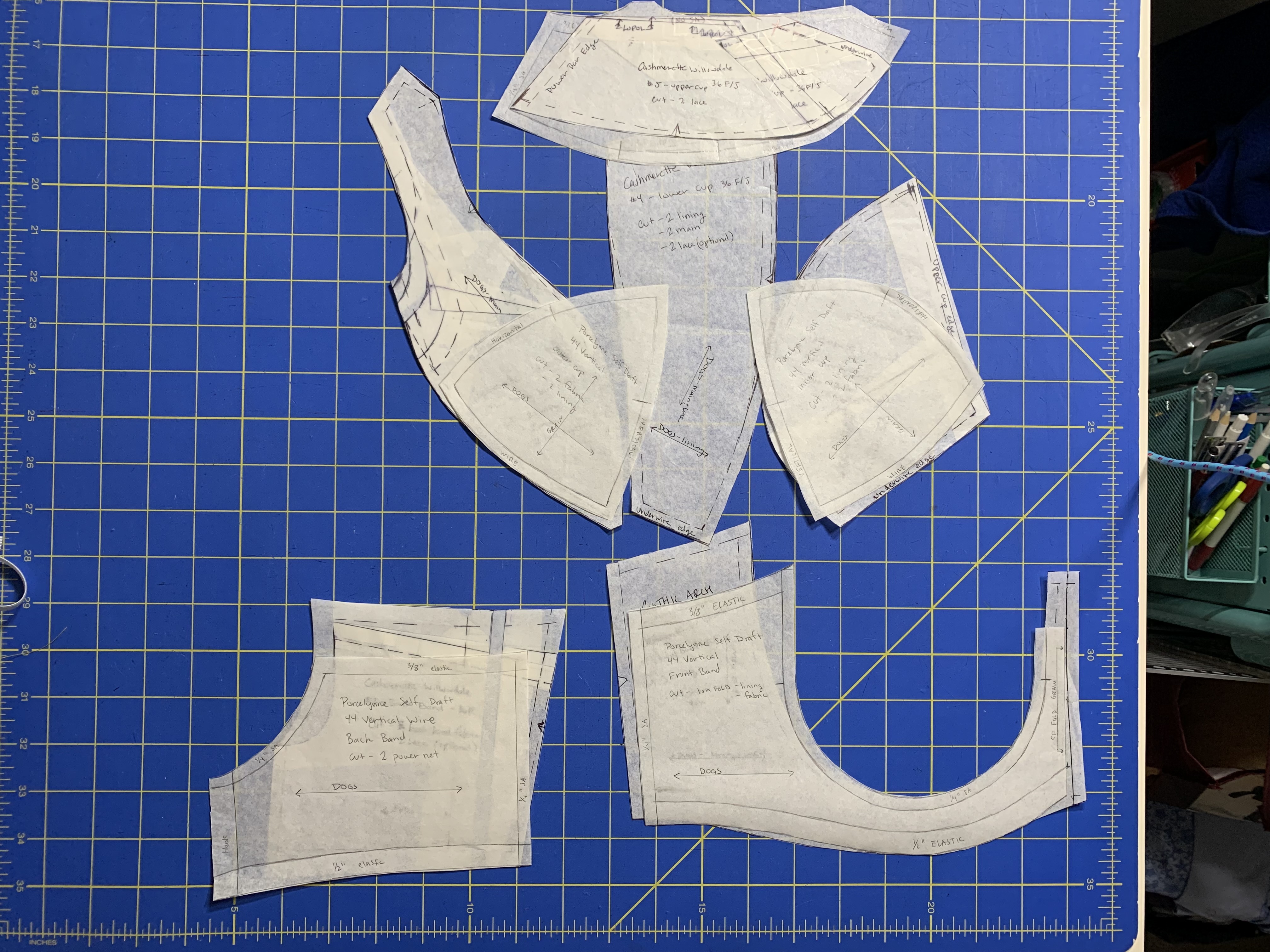
Compared to the Willowdale the new draft looks like a good balance between the Willowdale and my first self-draft, but the cup pieces still look a bit small:
I made another paper version to test the shape and size of the cups, and while it is still small it is much larger than the previous attempt, but still small compared to the Willowdale cup:
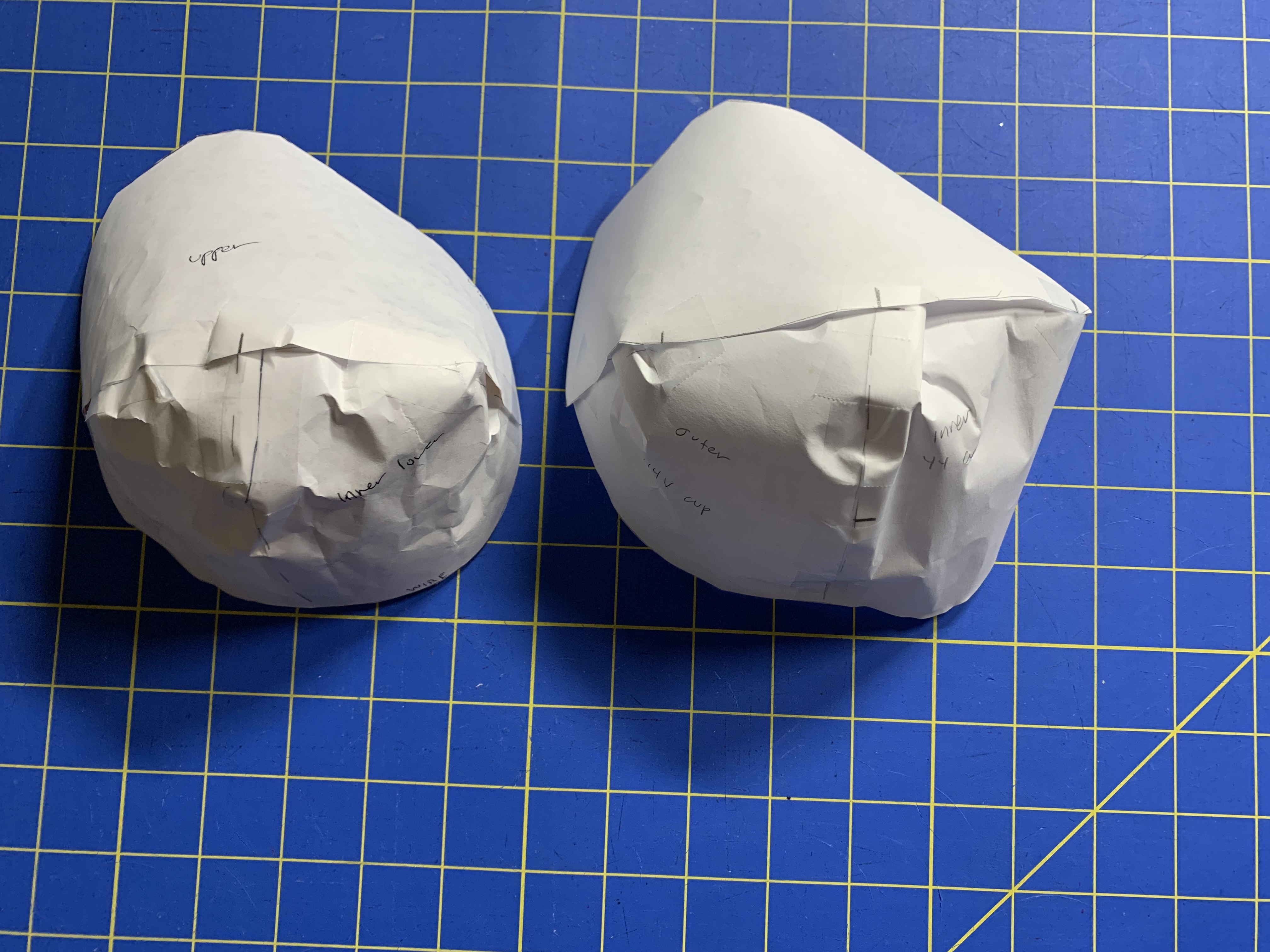


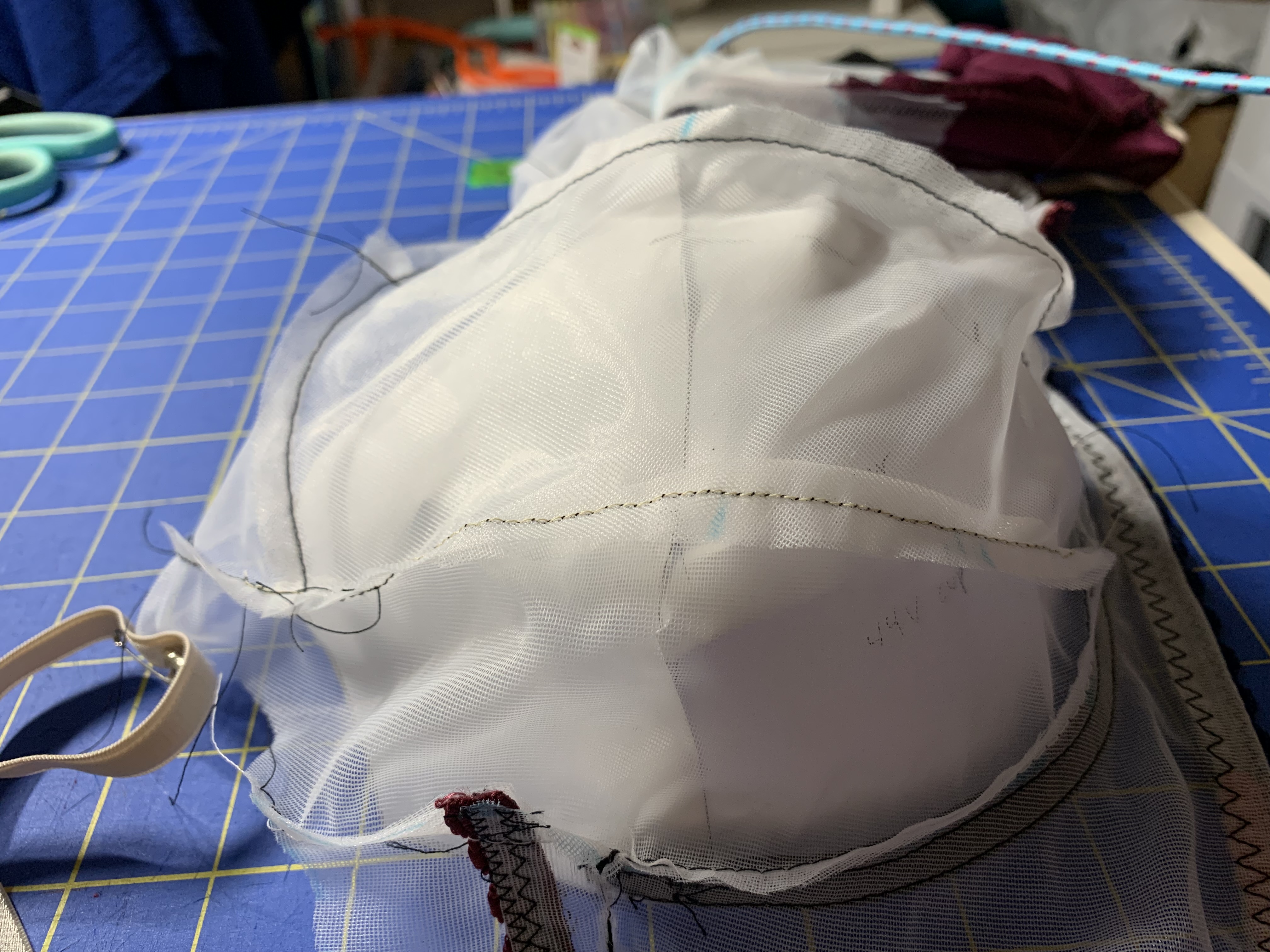
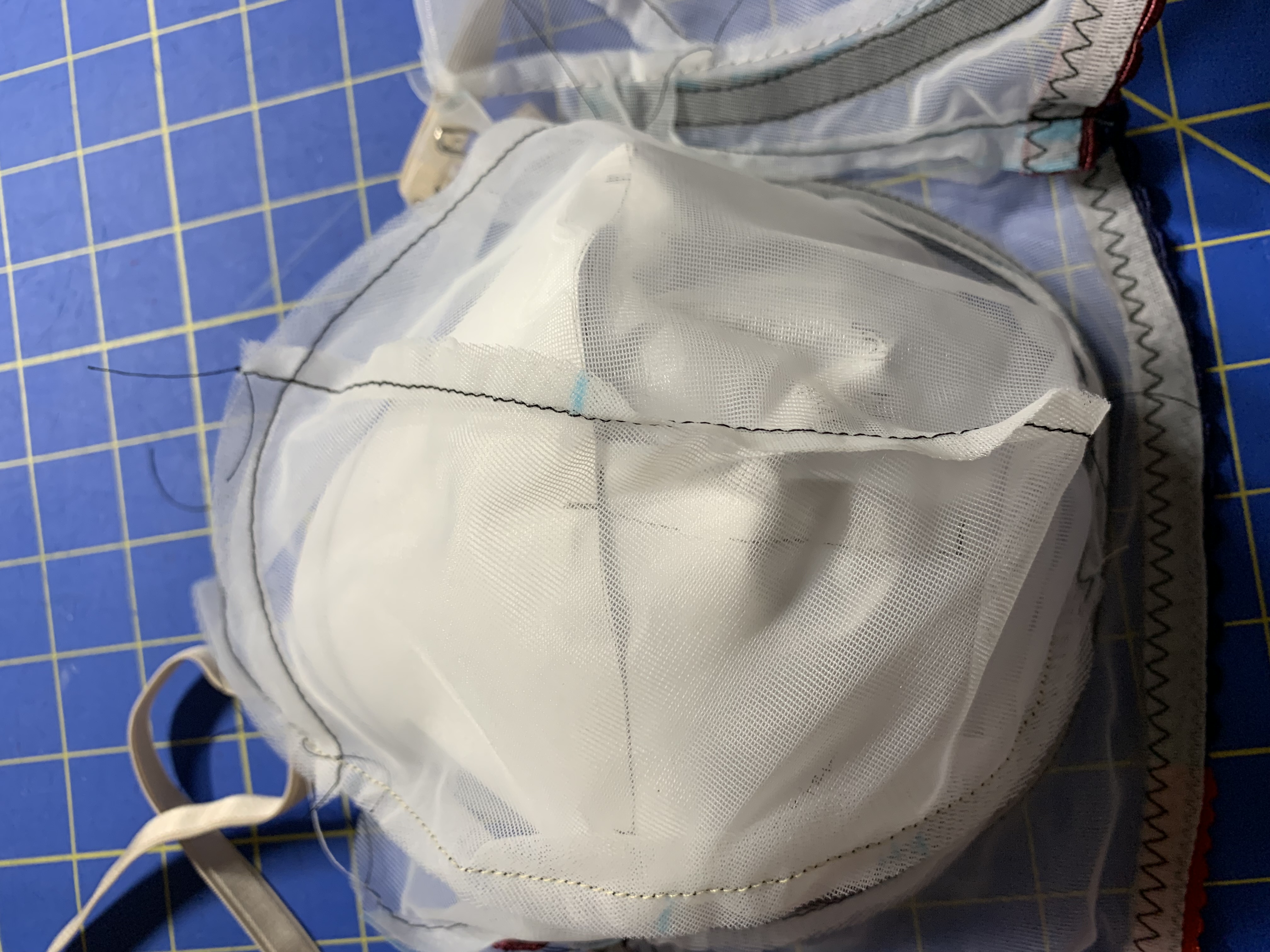
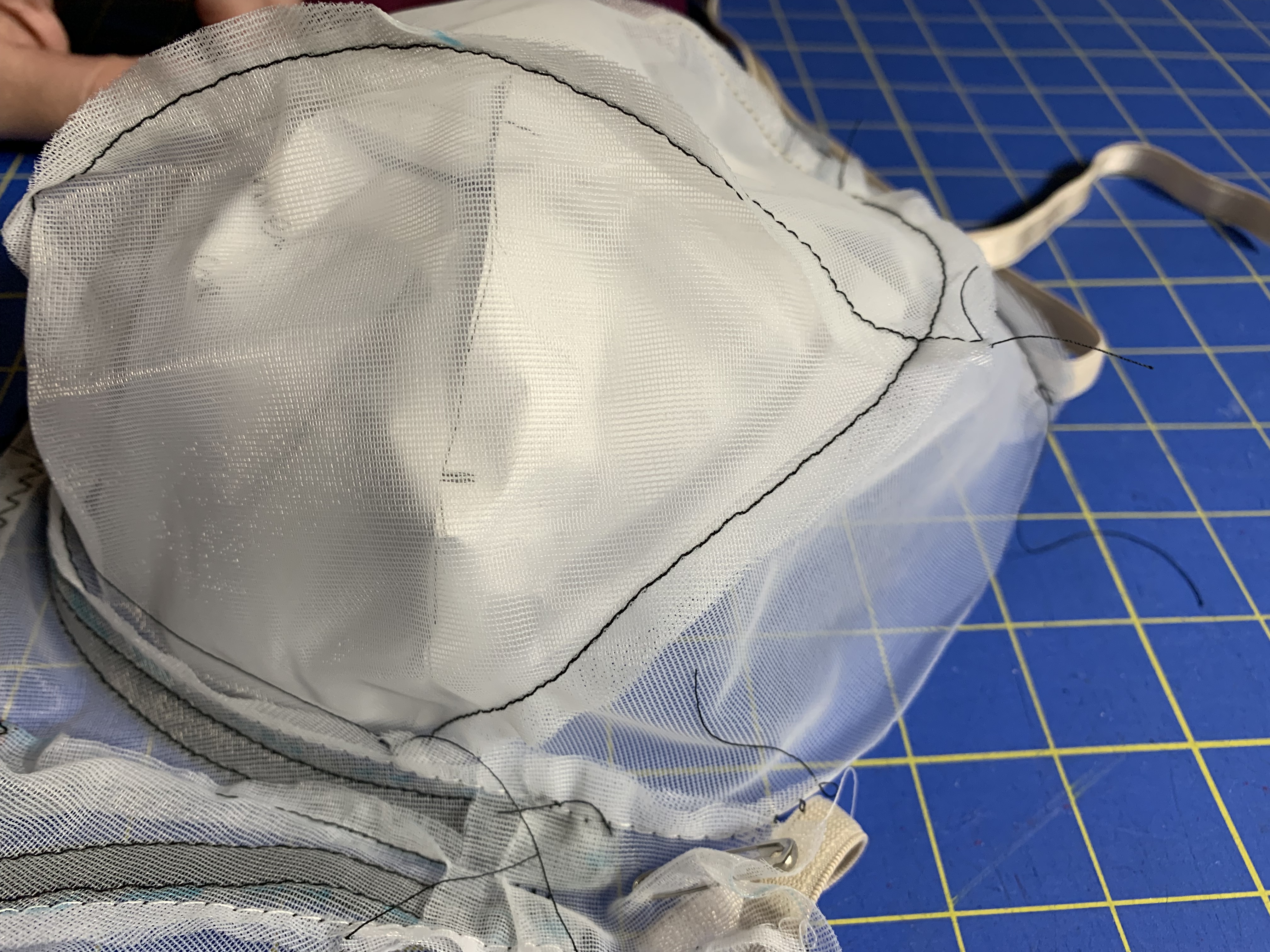
Probably the proper way to deal with this would be to draft another cup pattern using a larger wire line and then blend them to get the right mix of cup volume and wire line sizing. Or I could try to do an FBA on the new cup pattern pieces, which I am considering attempting because while this size is too small it’s not ridiculously so like the last attempt. I’ve got to consider next steps before I move to my next mock up phase.
Anyway, I think the quest to sew the perfectly fitting bra is far from over, but I’m still really impressed that I was able to take some measurements, instructions, pencil, and paper and end up with a pretty convincing test fit bra. Of course I still need to test out my re-drafted version 2, but I’m pretty happy with how this is going so far. Hopefully another post with more updates will be coming soon!
 Doctor T Designs
This is a fascinating journey – you are revealing all the shortcuts for commercial ventures and the secrets of why very few women can get a good fit. I suspect my problem is the volume/cup depth rather than the width of the wires – most feel too wide on my chest and poke me under the arms. Thank you so much! Sue
LikeLiked by 1 person
It has been a wild journey so far. I have seen some sources say that there are commercial RTW brands that use vertical wires, I just don’t know which those are, or even if brands mentioned in older resources still exist. And since I’m this far along fitting my own I can’t say I’d be bothered looking… The more I work on drafting and fit the more I’m convinced I do have an omega shape so commercial patterns probably won’t fit anyway. At this point, even if I can’t get a self drafted cup to work I’m not above frankenpatterning and fitting commercial pattern cups to a self drafted band the same way I did with the Willowdale or even just hacking the Willowdale cup up to make new pattern pieces with different style lines. I did just have a bunch of really pretty lace arrive and I do really want to move on to the fun part of design, but I’m committed to getting the fit better first even though it is definitely a process.
LikeLike
Another Sue here. You are certainly having a wild journey, but fascinating to follow along and pick up ideas for when I am in a position to start mine. Thank you for such comprehensive documentation!
LikeLiked by 1 person
Of course! I feel like these projects are addictive because it’s all I want to sew right now. But also because the fit is so close to the body, there is so much to look at with adjustments. I’m not going to say that I’m unhappy that I made as many full bras as I did before considering fit (I learned a lot about construction) but I do think that any information that can help some get to a better fit sooner is worth sharing and hopefully helpful to others.
LikeLike
Congratulations on continuing with taking so much trouble with this. You certainly make it clear why good bra fit is a multidimensional issue !
I confess I have moved away from ‘drafting from measurements’ for getting a good fit of basic garments (blocks). Drafting did not work for me as everything interacts, as you have found with your bra adventures. I tried multiple drafting methods without success. (There may be even more alternative drafting methods for clothes than there are for bras, and I must have tried many of them.)
When I managed to work out why the drafted blocks did not fit me, it was because the drafting methods did not include dimensions that are important for my body. In the area of getting basic blocks for main clothes, all drafting methods only deal with about 20 of the body’s dimensions, while Liechty & Co’s fitting ‘bible’ mentions over 80. Also the dimensions interact, so if you alter a draft to remove one problem it usually increases others.
The only thing which worked for me to get a good fit for a basic top and pants was ‘draping’ – starting from a muslin that is close to fitting, and working with it direct on the body (adding fabric where there is tension and taking out fabric out where it is too loose) until I got the fit I was looking for. This approach deals with the interactions directly, as immediately you make a change you can see what effect it has in other areas.
Is there a reason why this approach would be impossible for a bra ?? My most recent post on this is at :
https://sewingplums.com/2022/11/23/blocks-or-slopers/. Having had a look at it again, I’m not sure whether the issues translate to bra fitting !
Best Wishes for all your efforts ♥️ 👍 ♥️
LikeLiked by 1 person
Thanks for sharing the post! Super interesting. I think the biggest issue with doing this for a bra (for me at least) is how totally moldable my breast tissue is. It absolutely is not self supporting at all (never has been) and honestly I don’t even know how I could get it to stay in place to be draped without some interesting use of kinesthetic body tapes which really doesn’t sound like fun to remove. This is why most bra fitting guides suggest wearing the “best fitting bra” to do measurements, even though (obviously) the issue is often lack of a well fitting bra. I do think that I would be much more interested in draping for other garments though; I often used that technique to fit skating costumes when I was sewing those and everyone always was shocked how well garments fit. But, of course, it’s because they were being molded to the body directly. The issue with doing this for undergarments is that they are often being used to reshape the body in some way, so of course you might not always be able to do a direct fit like you can for something going over the body after it has been shaped.
LikeLike
Congratulations on continuing with taking so much trouble with this. You certainly make it clear why good bra fit is a multidimensional issue !
I confess I have moved away from ‘drafting from measurements’ for getting a good fit of basic garments (blocks). Drafting did not work for me as everything interacts, as you have found with your bra adventures. I tried multiple drafting methods without success. (There may be even more alternative drafting methods for clothes than there are for bras, and I must have tried many of them.)
When I managed to work out why the drafted blocks did not fit me, it was because the drafting methods did not include dimensions that are important for me. In the area of getting basic blocks for main clothes, all drafting methods only deal with about 20 of the body’s dimensions, while Liechty & Co’s fitting ‘bible’ mentions over 80. Also the dimensions interact, so if you alter a draft to remove one problem it usually increases others.
The only thing which worked for me to get a good fit for a basic top and pants was ‘draping’ – starting from a muslin that is close to fitting, and working with it direct on the body (adding fabric where there is tension and taking out fabric out where it is too loose) until I got the fit I was looking for. This approach deals with the interactions directly, as immediately you make a change you can see what effect it has in other areas.
Is there a reason why this approach would be impossible for a bra ?? My most recent post on this is at :
https://sewingplums.com/2022/11/23/blocks-or-slopers/. Having had a look at it again, I’m not sure whether the issues translate to bra fitting !
Best Wishes for all your efforts ♥️ 👍 ♥️
LikeLike
Here’s a thought on your wire problem: could it be that you’re using the wrong style of cradle? It’s true that the pieces of the bra interact with each other, so you need to consider all of them for good fit. What fabrics you use makes a difference. I get a pretty different fit with two layers of jersey with perpendicular DOGS vs. a single layer of micro-duoplex vs. sheer cup lining + lace. The elastics also matter. It might not just be the wires, maybe there are some additional variables that could be tweaked. You used a gothic arch on the Willowdale, and it’s your favorite fit: could that be the thing that made the difference? It really changes how the bridge fits.
I don’t think draping will work for a bra, because as you say, the breast tissue is more likely to mold to the fabric than the other way around, and you’re also not just smoothing the fabric to watch grain lines and eliminate wrinkles but are actually actively using the fabric’s stretch. I’d go in the direction of taking the Willowdale and tweaking it until you can use it as your basic block pattern. Style manipulations on bras are not that complicated once you have a good basic block, and a “pretty close” fit is much easier to tweak than starting from straight measurements.
LikeLiked by 1 person
I just tested the latest re-draft last night and honestly I think it’s going to probably end up being a really good starting block. It’s still not totally perfect but it’s the first time the wires seem to be sitting near the right place and not an inch down my rib cage. I made some changes to the cup draft I did and even those seem pretty good; I pinned some extra fabric to them and drew out how I think I need to change the pattern, but it’s really just an upper cup issue and some very minor tweaks to the back band right now. I’m honestly pretty happy with the drafting results right now because I feel like I have a really good template to use for picking out pattern sizing and making adjustments to the Willowdale and other patterns I’ve been using.
LikeLike
Oh! To reply to your original point, I’ve been consistently using duoplex and sheer cup lining in my most recent 3 bras, so I don’t think there is too much difference in materials (a slight bit from the elastic). The biggest difference between all the bras I’ve made has been the wire size because on my first few I didn’t realize how wire size/shaping and fit were related and on my recent bras I’ve been sort of searching and testing wires that are all in a close but not quite right situation. I think the issue was I picked a too big wire line on the cradle for my first few Willowdales and compensated with a too narrow wire, but the 44 Vertical seems to be the happy middle spot in terms of diameter and length when the pattern is drafted for it. The 44 felt too big when the pattern included too much wire spring/had a wider opening on the cradle. I’m definitely going to do some more testing though.
LikeLiked by 1 person
I’ve had Beverly’s book for quite a while but haven’t tried a self draft yet. So much fun trying all the patterns already made. I love watching your journey though!
LikeLiked by 1 person
Such an interesting series of posts! I like your somewhat scientific approach. One thing I have noticed about Beverly Johnson’s bra drafts, and presumably the method in vol 2, is that the powernet she uses for the back band is super-firm. If you use a stretchier powernet, you would need to shorten the length of the back band to accommodate the extra stretch. I have personally found that the band elastic (how stretchy it is) makes a big difference in the comfort of the fit. I’m looking forward to following the rest of your bra-making journey
LikeLiked by 1 person
That’s super helpful – thanks! I have some super firm power net but I was saving it for strapless or something that needed more structure, so probably I have been using a pretty mid-weight up to this point. I am also finding elastics make a big difference but also that they tend to stretch out a bit over the first few wears and then settle in, so sometimes it is hard to tell how structured they are right away.
LikeLike