I’ve been working quite a bit the past month to expand my bra sewing pattern library by fitting lots of patterns to my self-drafted band. I’m about to dive into some of those projects, but this past weekend the BJ’s Bralette I had sewn up a while ago had a bit of a fabric fail. The lace frayed and came undone from one of the neckline edges that was covered with fold over elastic. I’ve used this type of fabric in the past, but on skating costumes where I’d had everything safely enclosed in a 4-thread overlocked seam or with double rolled 3/8″ or 5/8″ elastics, so I was a bit unprepared for this. When I made the BJ pattern it was on a bit of a whim, but I’ve actually been using it more than I expected, so I decided to make a few more sleep bralettes, both because I wanted some quick projects but also for the utility of having more options.

I’ve been working on fitting the Sahaara pattern from Rubie’s Bras, so it seemed like a good chance to practice some of the construction techniques and to double check my pattern alterations. However, as I was planning this LilyPADesigns released a new free pattern – the Mysa Lounge Bralette. I’ve been wanting to try some of the LilyPADesigns patterns, but I was trying to pace myself on pattern purchases (I know I am working on a lot of them now but I’ve generally been slowly accumulating patterns since the Bra Bee and have been waiting to use them while I was working through all of my fitting experiments and self-drafting a band pattern) and I wasn’t entirely sure about where I fit in the size ranges. I was really happy to have the chance to try a LilyPADesigns pattern for free because I felt like it could be an easy and much less expensive way to test out the fit and sizing of the patterns and to decide if I might want to buy some more of her patterns in the future. However, this has sort of resulted in what I’m jokingly calling the “battle of the bralettes.” Now, it’s not really a fair comparison because the Sahaara is drafted for a stable cup and frame and the Mysa is drafted for stretch fabrics, but I thought it would be fun to cut and sew both projects at the same time to do a bit of a comparison.
The Sahaara Bra(lette)
I’ve been working on the Sahaara pattern for a few months. I started working on it before I got into self-drafting my custom bra band, so it got moved to the back burner for a bit. I’m glad I did that though because I feel like going through the drafting process did help me see how to alter the cups better, even though these cups are a different shape than those for a wired frame. I made four versions of the pattern, mostly just playing with how much volume I needed to add to the cup. I wasn’t planning for this version to be a supportive bra because of the changes I made to the materials. And to be fair to the pattern, I knew that this wouldn’t be the best test of fit because doing a sleep bralette in stretchy fabrics is not the sort of fabric this pattern is drafted for, but I figured if there were any major fit issues this would alert me to them before I got too far into making my real version. I also thought this would be a good way to practice construction techniques on something functional, so that was nice too.
For this I used some deep stash fabric. Like, super deep stash. I used to order mystery bundles when I first started sewing because I didn’t have a lot of money as a grad student and it seemed like a good way to stretch a budget and a fun way to get unexpected materials. This cotton jersey was part of one of those mystery bundles and when I got it I was not in love with the pattern. Now I think it’s actually pretty cute, so I guess that says something about age and time? I’m not sure. Either way, I’m enjoying this fabric but I’m not completely emotionally invested so I’m ok using this to test potential fails. I used this fabric to test out my self-drafted underwear patterns and after I re-did the elastics on my first set I’ve been wearing it all the time because it’s comfy and soft, so I thought it would be good to use for these sleep bralette sets. It took me a while to decide what elastic to use, but I decided on this minty green color – I think it gives it a sort of softly seasonal wintery vibe, which I actually quite like.

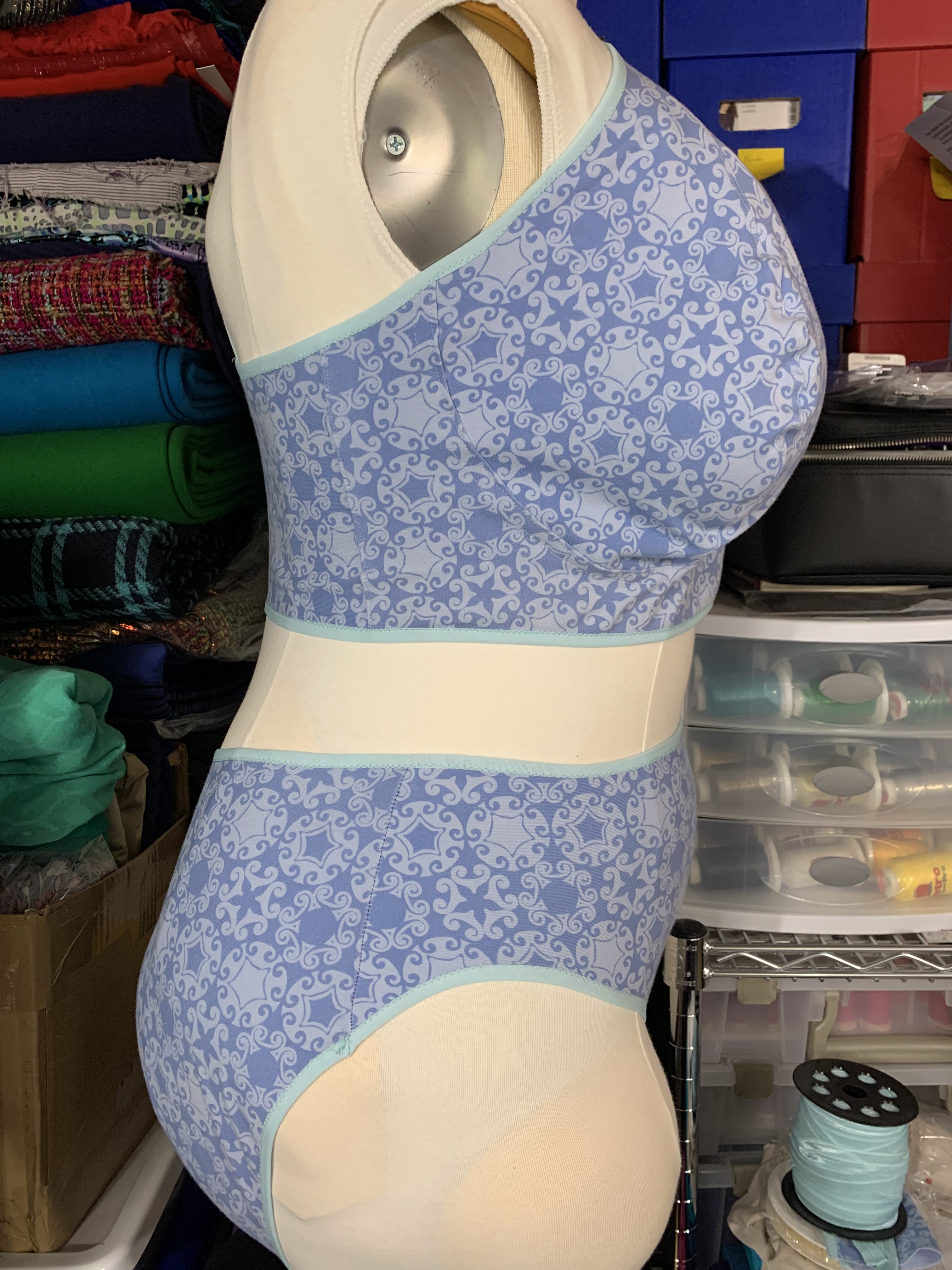
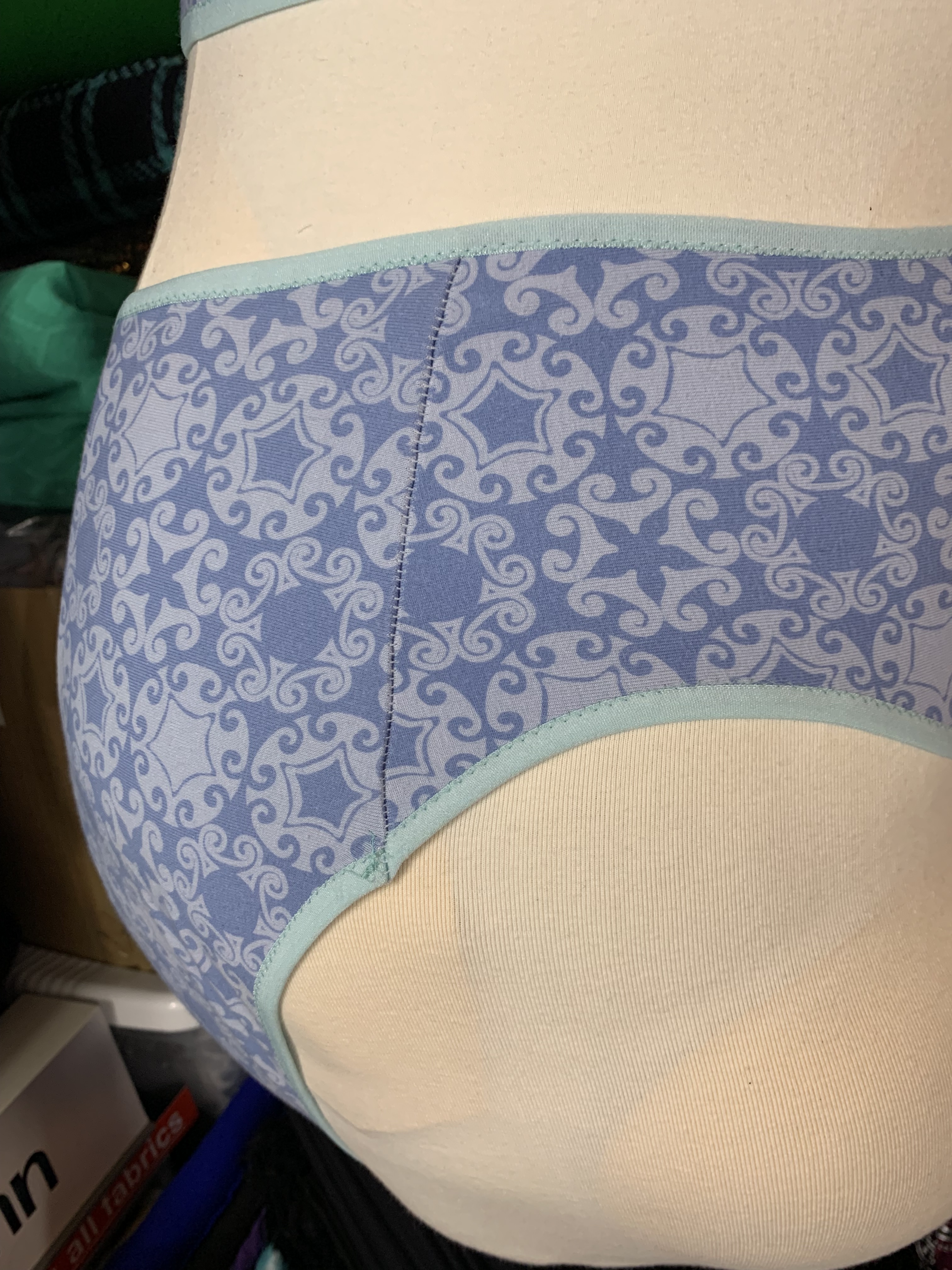
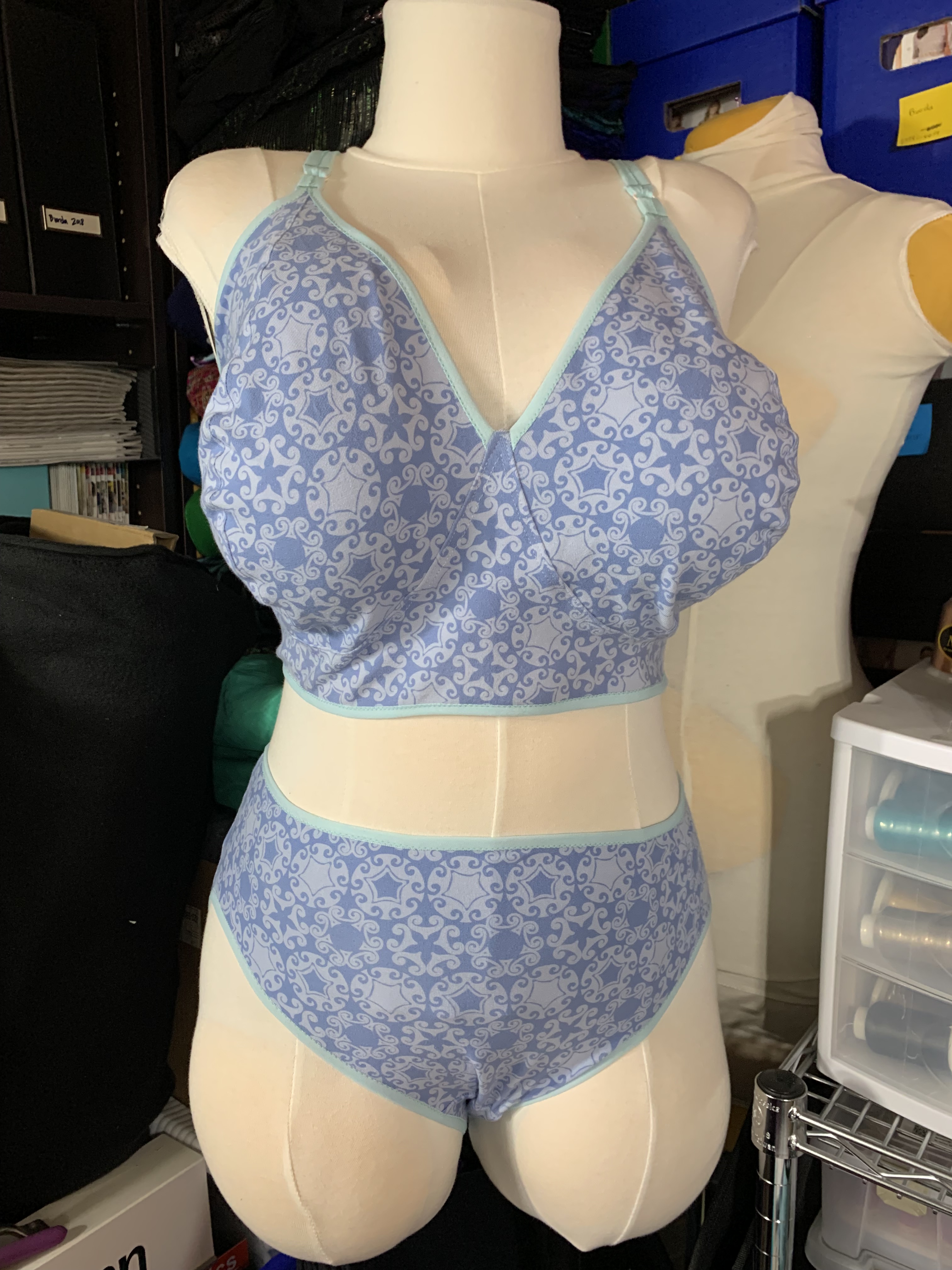

I’m really pretty happy with how this turned out. I added some extra width to the back and cut it on a fold to account for the hook and eye space (because I don’t like hook and eye for a sleep bralette), but I ended up taking it out again and using a center back seam because of the amount of stretch in the fabric made it unnecessary. Similarly, the cups are probably a little big because of using the stretch fabric, but this makes me very confident going into making this with the minimal stretch materials next. And since that was my ultimate goal, I am happy and ok with this. If I was going to make a stretch version again I would probably just cut the back on the fold and ignore the space for the hook and eyes and I would use the original cups from the 36K pattern, because they would probably stretch nicely to fit and give the correct tension. I do really like the shape and style of the bra and the finishing of the elastic at the ring is a nice clean-looking technique. I followed the instructions for View B here – I used only a single layer of fabric so there are raw edges on the inside. I think when I make my real version I will make sure to used a sheer cup lining like I have been testing my patterns in for extra support and also to help make a nice clean finish on the inside of the bra. I also tried some different techniques and stitch settings for attaching fold over elastic (I used the settings in the Sahaara instructions for the stitch length and width and I set everything in flat instead of in the round) and I quite like how that turned out as well. I think I’m still refining my FOE technique; it’s those pesky ends that can look so messy sometimes! But I think it’s getting better and overall I am very happy with how this set turned out. I can’t wait to use it this month!
The Mysa Lounge Bralette
The Mysa was obviously not at all on my radar because it only released around Thanksgiving! But when the pattern dropped I was already thinking about sewing up some new sleepwear/house bras, so I decided I might as well try it out right away. One thing I really like about this pattern is all of the sizes are stacked, and the LilyPADesigns website has a super helpful tutorial about grading between different sizes on this pattern when you have a different Horizontal Hemisphere (HH) and Bottom Cup Depth (BCD) measurement. For this pattern I used the GG-KK cup range and used the 15.7 HH and 6.5 BCD measurements to get my starting pattern. Since this pattern is for stretch fabrics with 50% stretch, I didn’t really see a good way to test it without sewing it up in a knit fabric, so I decided to just go for it. I will say that I’m using the same fabric as I used for the previous pattern, and I opted for using 1/2″ picot elastic everywhere to be a bit thrifty about it. I bought some elastics from Wawak back when I was first starting lingerie sewing and was just looking for inexpensive materials to test with. I have to say, while I really appreciate Wawak for most things (they have a lot of specialty stuff at reasonable prices and shipping to me is super fast) I’m not a huge fan of the Wawak lingerie options. They don’t have a lot of size selection and their picot elastic is super stretchy, which doesn’t provide enough support for me in a normal bra. However, for a sleep bra and underwear set, it’s perfect. I’m also using some of the Wawak fold over elastic. I’ll be honest – the best FOE is going to be found at the specialty bra suppliers like Emerald Erin and Bra Builders, but if you are looking for a budget option I’ve had decent luck with Amazon sources like this one from JESEP, this variety pack, or this one from PAMIR TONG over the Wawak FOE. The Wawak FOE doesn’t have a shiny side, the colors are limited, and it’s not the softest option. But in the spirit of using up my stash I thought I’d try it for this project. It’ll also be a good test to see how it wears over time.
Anyway, as for the pattern itself I was pleasantly surprised by how well it fit right away. While I was at first overwhelmed by the LilyPADesigns sizing system, I actually think it’s great once you take the time to figure it out because you can get a very good starting size by blending the correct BCD and HH pattern sizes. In all of my bra patterns I have had to take massive darts out of the underarms and upper cups because of my small wire relative to large volume sizing, but I did not have any issues with that in the Mysa. I do think that there is a bit less support that I was hoping for, but I’m pretty sure that’s from how stretchy this fabric is and the fact that I used the overly stretchy elastics from Wawak. Generally speaking though, I’m really happy with how this turned out.
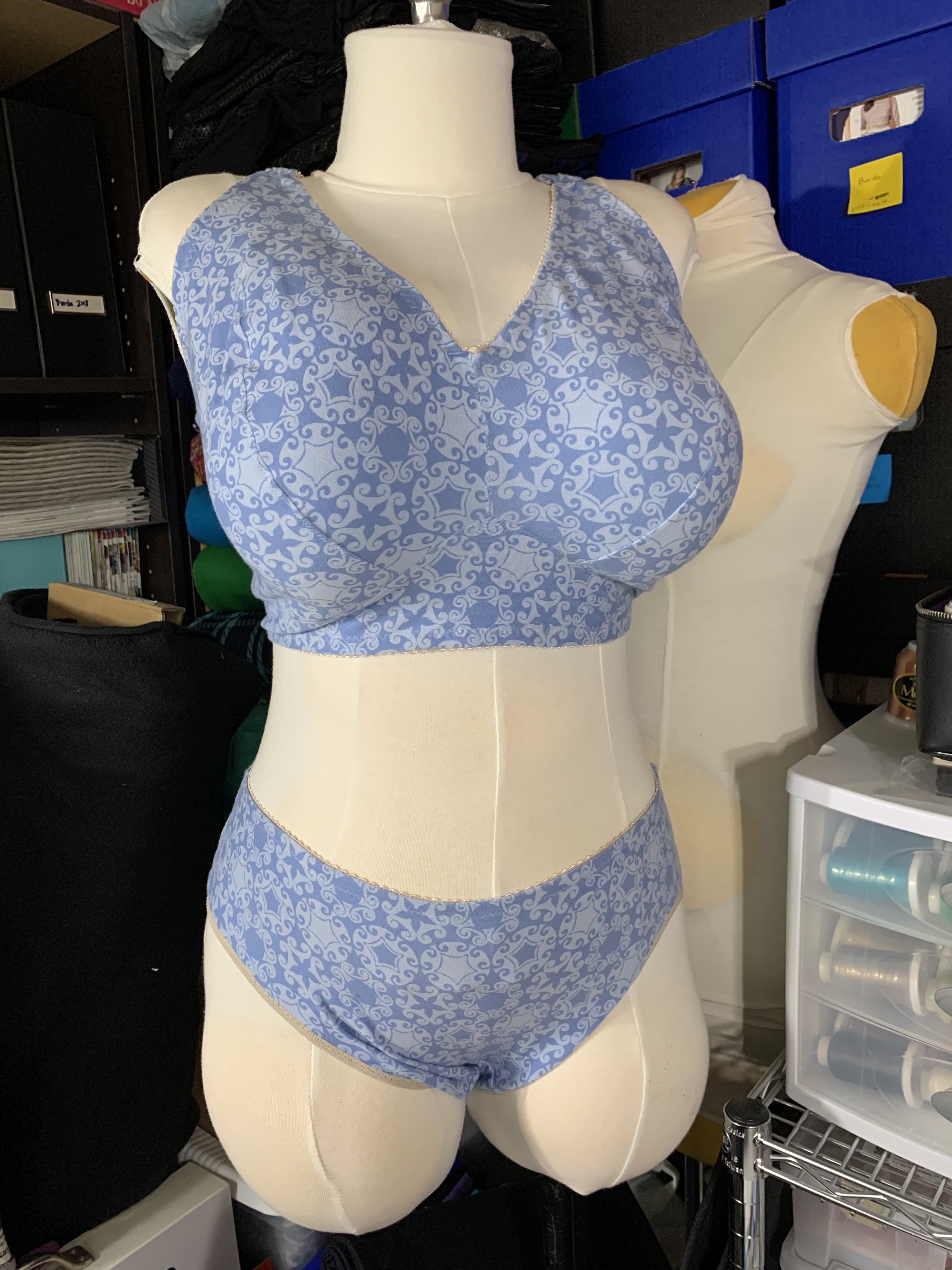
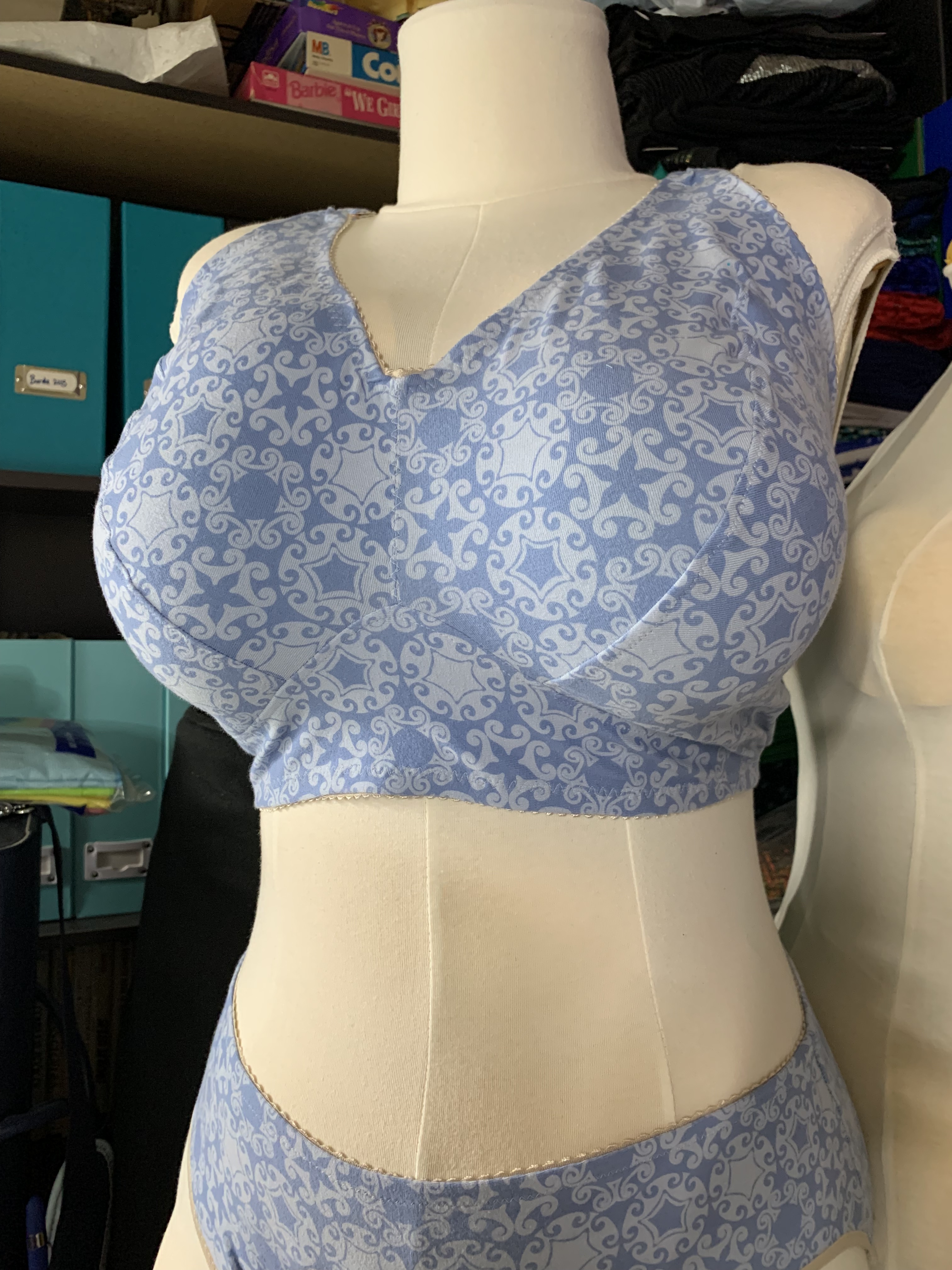

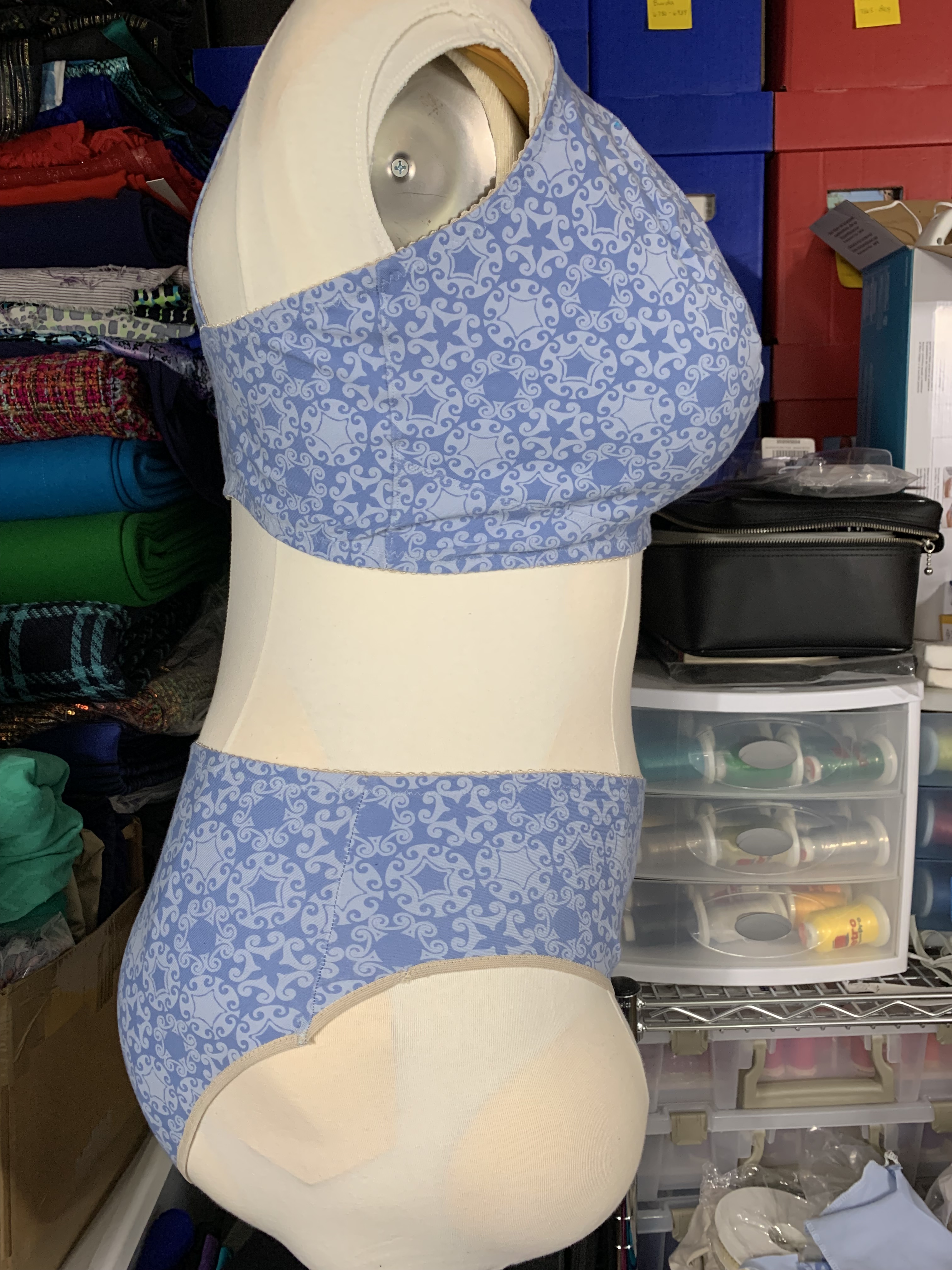

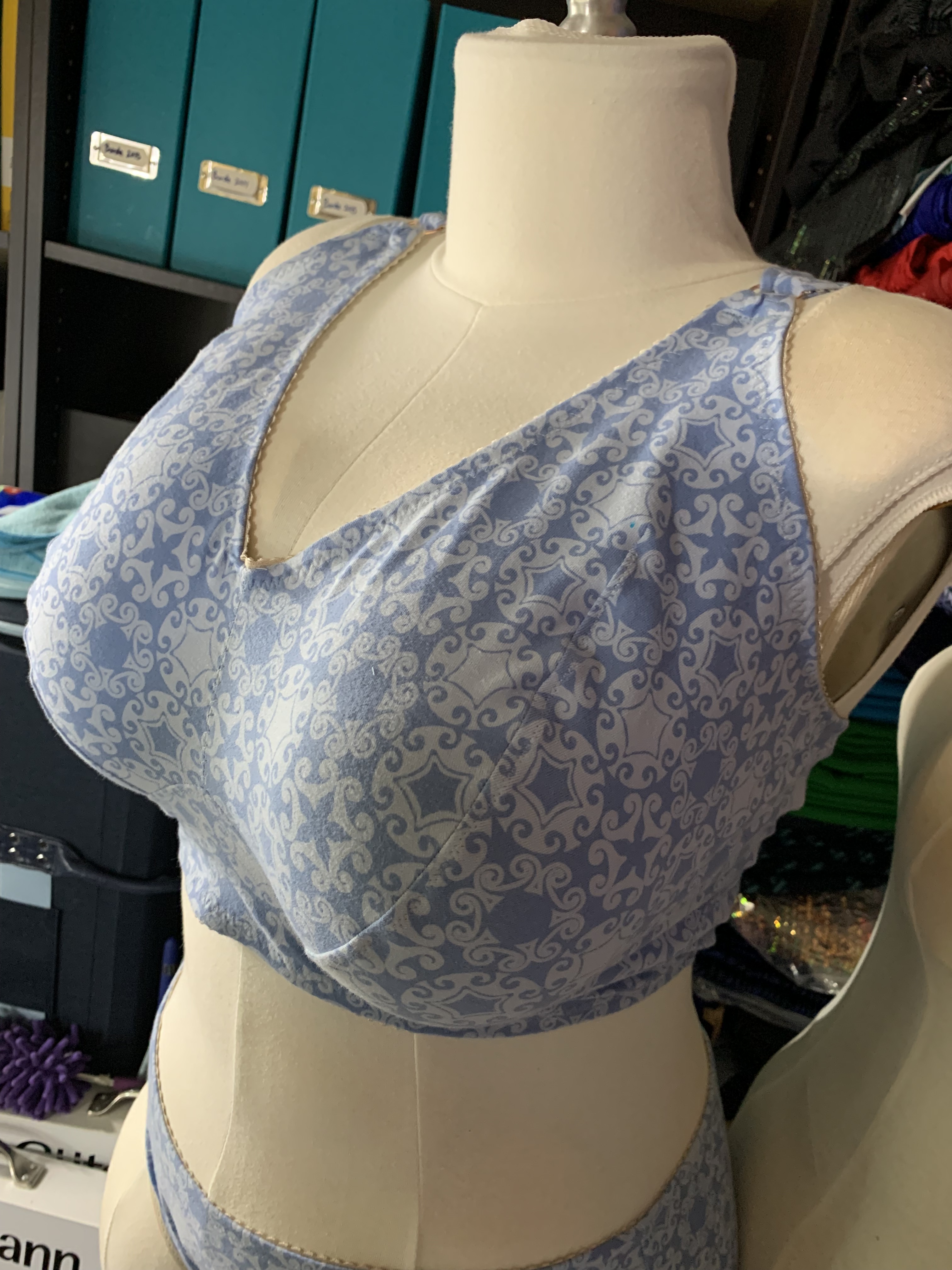
Since I am not planning to sew another Mysa for a while, I wrote up a formal pattern review:
Pattern Description: Stretch bralette pattern with darted cup seams. This is a free pattern from LilyPADesigns.
Pattern Sizing: Comes in cup sizes A-DD, DD-GG, and GG-KK (UK sizing) and with bands from 26”-52”. The sizing is based on Bottom Cup Depth (BCD) and Horizontal Hemisphere (HH) measurements. I used the DD-GG size pack and started with a blend for the cups with a 6.5 BCD, a 15.25” HH, and a “36” Band. The lowest size band for these cups is a 38, but I made some pattern alterations (see below). I really like how the website has a helpful blog post on blending sizes to help you trace your pattern, because this is how I got my starting pattern.
Were the instructions easy to follow? Yes – I think the instructions were very easy, especially if you have sewn a bra before or have some sewing experience. I think there were a few things that were missed (for example, the instructions don’t tell you to topstitch after you attached the cups to the band, but all of the illustrations clearly show topstitching after that step and there is one notch mark on the cup/band placement that doesn’t appear on the pattern but seems to be referenced in the instructions) but overall the instructions are very good. I don’t know if I would recommend this as a first pattern for someone who has never sewn before, but I think even a relatively new sewist would be able to follow the instructions pretty easily.
Did it look like the photo/drawing when you were done with it? Generally speaking, yes! I did make sone changes that altered how the pattern turned out but overall I think the final bralette looks very much like the samples.
What did you particularly like/dislike about the pattern? I have spent a lot of the past year fitting bra patterns for my large cup/small band/small wire size so I will say I was pleasantly surprised by how well this pattern fit directly from the pattern. Of the bralette patterns I have tried, this one gives the most coverage, which I like and I think this one has the most opportunity to provide support. I used a 50% stretch fabric like the pattern recommended, but I think I would need something a bit firmer (maybe 30-40%) to get actual support from this pattern. I don’t think the size is too big (the fabric does need to stretch a bit to fit) but I do think if you are in the larger size ranges you may need to consider how stable or stretchy your fabric is depending on the results you want to get from this pattern. My goal was to make a sleep bralette so I was perfectly happy with the fit (it provides containment but not compression), but if you want something more stable you may need to consider your fabric choice a bit more or perhaps go down a size to get a bit more compression from the stretch fabric.
Fabric used: I used a cotton jersey from deep stash, two rings from my collection of supplies, and lingerie picot elastics from Wawak. I also used a scrap of sheer cup lining to stabilize the front but you could use twill tape or something else there as well.
Pattern alterations or design changes you made: I didn’t make any alterations for fit aside from grading between my measured sizes, and reducing the back band size, which is wild to me! I did decide that since I was going to make a sleep bralette I omitted the back hook and eye closure, and I made fabric straps instead of using strap elastics to accommodate this change. I also used 1/2” elastic everywhere because that was what I had on hand and available for what I was considering a (hopefully) wearable muslin when I was cutting it out. If I make this again in the future I will use better quality 3/8” and 3/4” elastics in the edges and band to give a bit more stability to the bralette. I do like the 1/2” very soft picot in a sleep bralette though because it doesn’t put any uncomfortable pressure on my abdomen while lying down or lounging.
Would you sew this again? Would you recommend it to others? I think I will probably sew this again, but maybe not for a while. I have a lot of other patterns and projects I want to sew more immediately, and I think I have enough soft bralettes for a while. I would definitely recommend this pattern: it is very comfortable, the instructions are good, the fit is great, and it’s free!
Conclusion: I have been wanting to try the LilyPADesigns patterns but I was a bit intimidated by the sizing at first, so I was very happy to be able to test things out with a free pattern! I really enjoyed having a quick and easy project that came together very quickly. Overall I am very happy with the results of this project and I will definitely make more from this pattern in the future, though I may consider what changes I can make to get a bit more support. I am also inspired to try more LilyPADesigns patterns now because the initial fit was so great and because the size ranges are pretty phenomenal if you are in the larger cup size range.
Conclusion
So – who is the winner in the Battle of the Bralettes? Honestly it’s probably me because I have some new patterns and underwear! Practically speaking though, I like the fit of both of these patterns more than the BJ’s Bralette I had made previously because both of these patterns have more shaping in the cup, which I think is really important for the larger cup sizes. Between the Sahaara and the Mysa, I think I prefer the Mysa pattern as a bralette as I have made them here because it has just a bit more coverage in the front. However, the Sahaara isn’t really intended to be sewn with these sorts of fabrics, and I will say I think both patterns gave me a very similar fit and achieve practically the same results when worn. I’m glad I did this test run because I’m confident the Sahaara is ready to be made up now with a reasonable chance of fitting well, but I’m waiting to do a full review on that pattern until I’ve had a chance to make it and wear it properly. As for the Mysa, I’m really happy to have that pattern in my collection and I am sure I will pull it out again when I’m ready to make another bralette. I’m also super happy with how it fit right away and I’m definitely going to be buying some more LilyPADesigns patterns soon.
In the meantime, I’ve found a new podcast – Underdressed – and it’s been really interesting to listen to as I’ve gotten more and more into bra sewing! It’s an interesting discussion with people in the industry, but I think it’s really accessible to listen to even if you are new to lingerie sewing or just want more sewing content to listen to.
Anyway, even though this month is really busy I am trying to stay consistent with sewing and work at least a little each week on a new project. Next up – a full Sahaara bra and my first time using a Bra Builders kit! Happy sewing!
 Doctor T Designs
Thanks for the bralette reviews, as that’s what I’m interested in trying. I was surprised that your deep stash fabric is identical to one I bought from Fabricmart in 2012. Here’s my notes on that fabric, if you need them: 90% organic cotton, 10% lycra. 4-way stretch – more so vertical. Very soft. Will fall close to the body – clinging and curving. Medium weight. Uses: Active wear, underwear, dress, skirt, shirt, sleepwear. Cold gentle wash. So Fabricmart, at least, though it was suitable for your project!
LikeLiked by 1 person
Awesome – thanks for the fabric info! This is very helpful 😊
LikeLike
I am enjoying reading your very informative notes on your bra sewing adventures. Just getting back into sewing after a hiatus (life interrupts sometimes) and really need bras. Your notes and comparisons are so helpful!
LikeLiked by 1 person
Thanks! Hopefully you get time to sew soon!
LikeLike